1 · Orchestration
Every case owned, every hand-off tracked, every wait named and chased. From the first call to the payment, nothing stalls quietly.
Explore OrchestrationRevenue orchestration
sehaXG is where a hospital's revenue cycle is run. Every case has an owner, a next step and a date; approvals hand off to billing; waits on doctors, Finance or Procurement are named and chased. Intelligence learned from your own denials sits on top, and AI agents take the repetitive digital work.
Built around your team
Orchestration keeps every case moving. Intelligence makes each case better prepared than the last. AI agents take the repetitive digital steps, inside the same cases, owners and rules.
Read: three habits of a revenue team that gets paidEvery case owned, every hand-off tracked, every wait named and chased. From the first call to the payment, nothing stalls quietly.
Explore OrchestrationRules learned from your own denials, checks before claims and authorizations go out, a reason for every disputed claim, and the numbers that defend your team.
Explore IntelligenceAgents check statuses and prepare and submit claims, authorization requests and appeals, inside the cases your team owns.
Explore AI AgentsThree layers, in the order they matter.
Every case has an owner, a next step and a date; approvals hand off to billing; waits on doctors, Finance or Procurement are named, chased and raised when they pile up.
A closer look
Owned work first, intelligence on top, and AI agents for the repetitive digital steps.
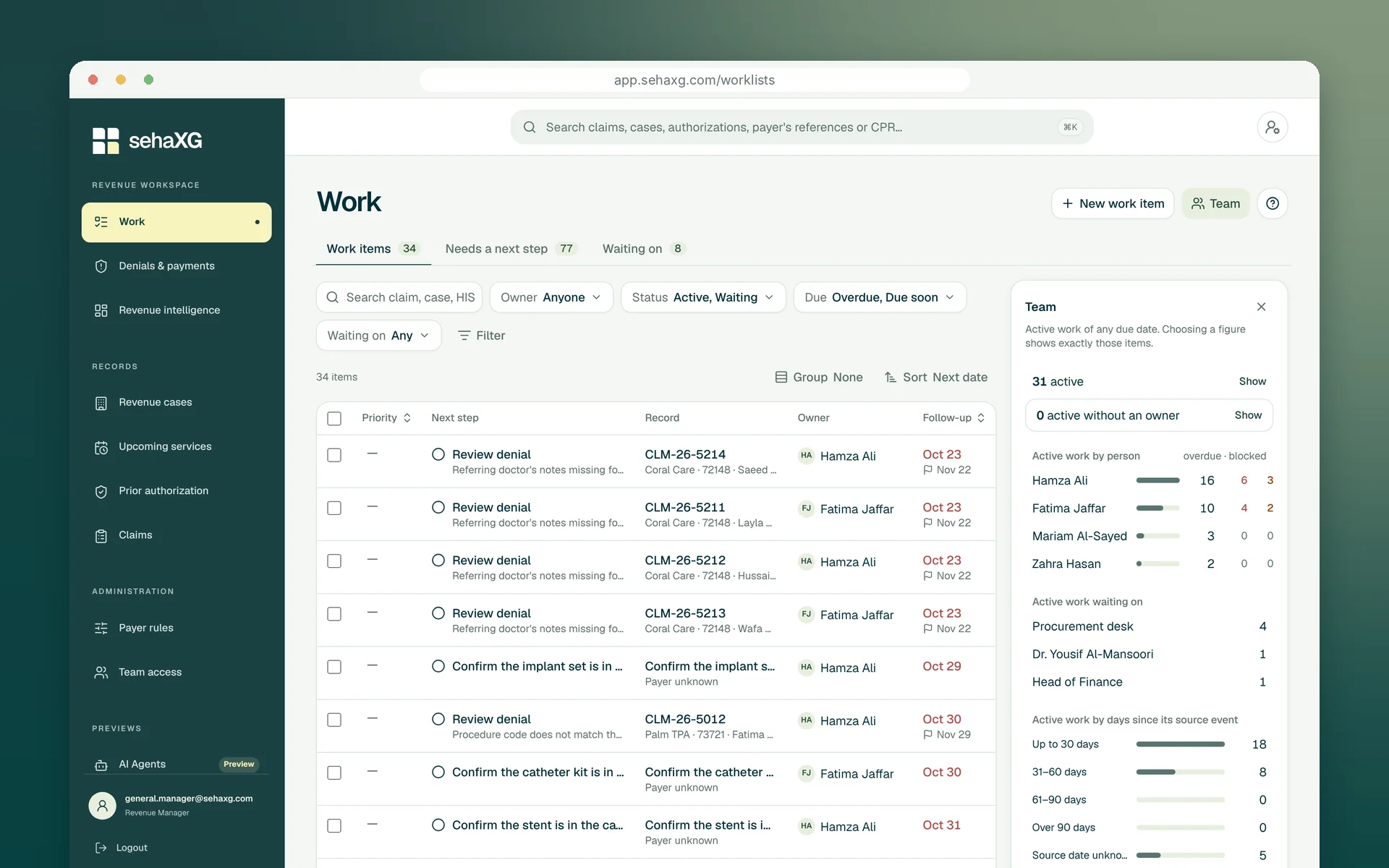
Orchestration · owners
From the patient's first call to the payment, each case sits with one person, with what happens next and when. The Team panel shows everyone's open and overdue work, and anything left without an owner shows up at once.
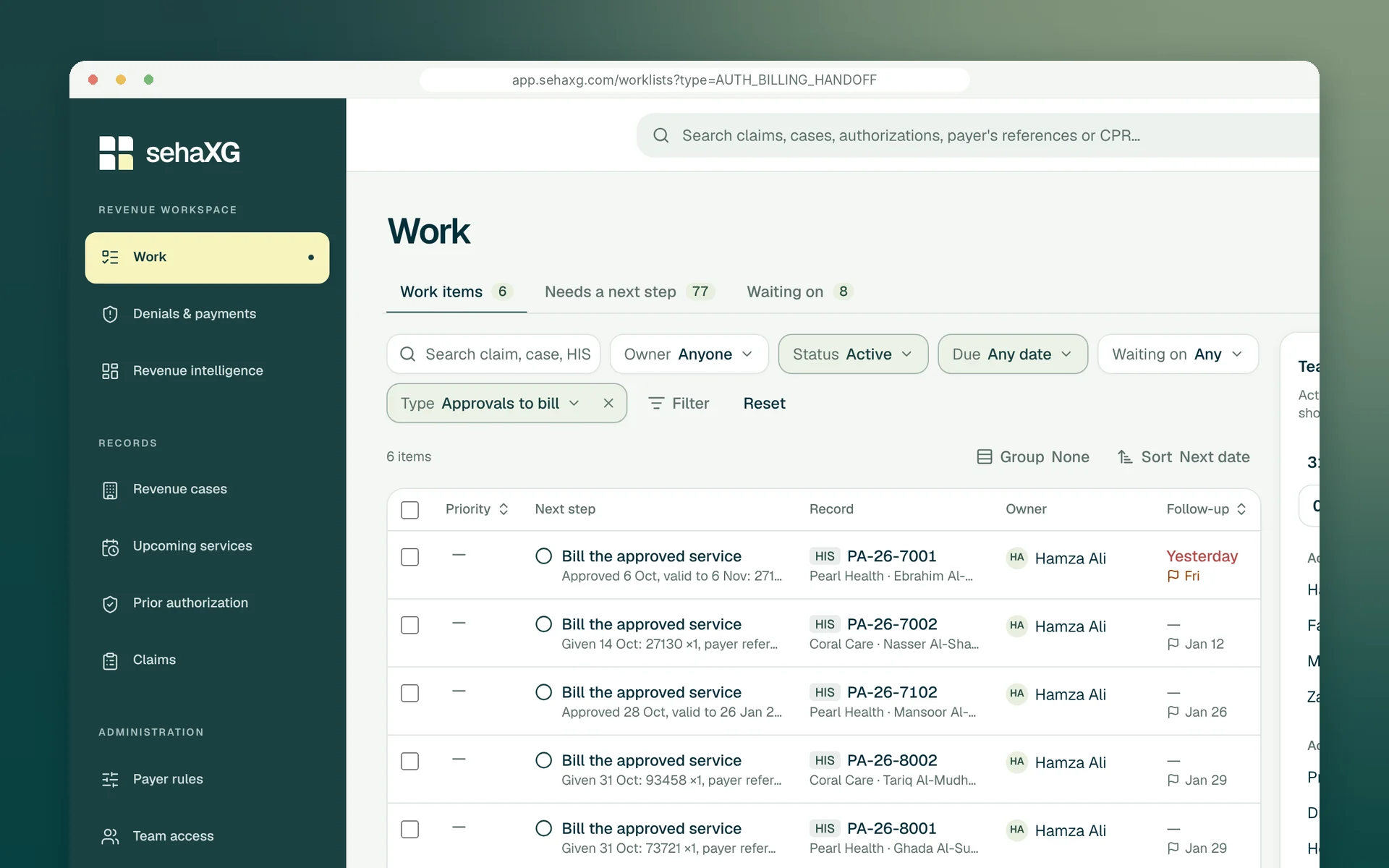
Orchestration · hand-offs
When the payer approves a service, billing already has the work item to bill it, due before the approval ends. Nothing depends on someone remembering to pass it on.
Orchestration · waiting on
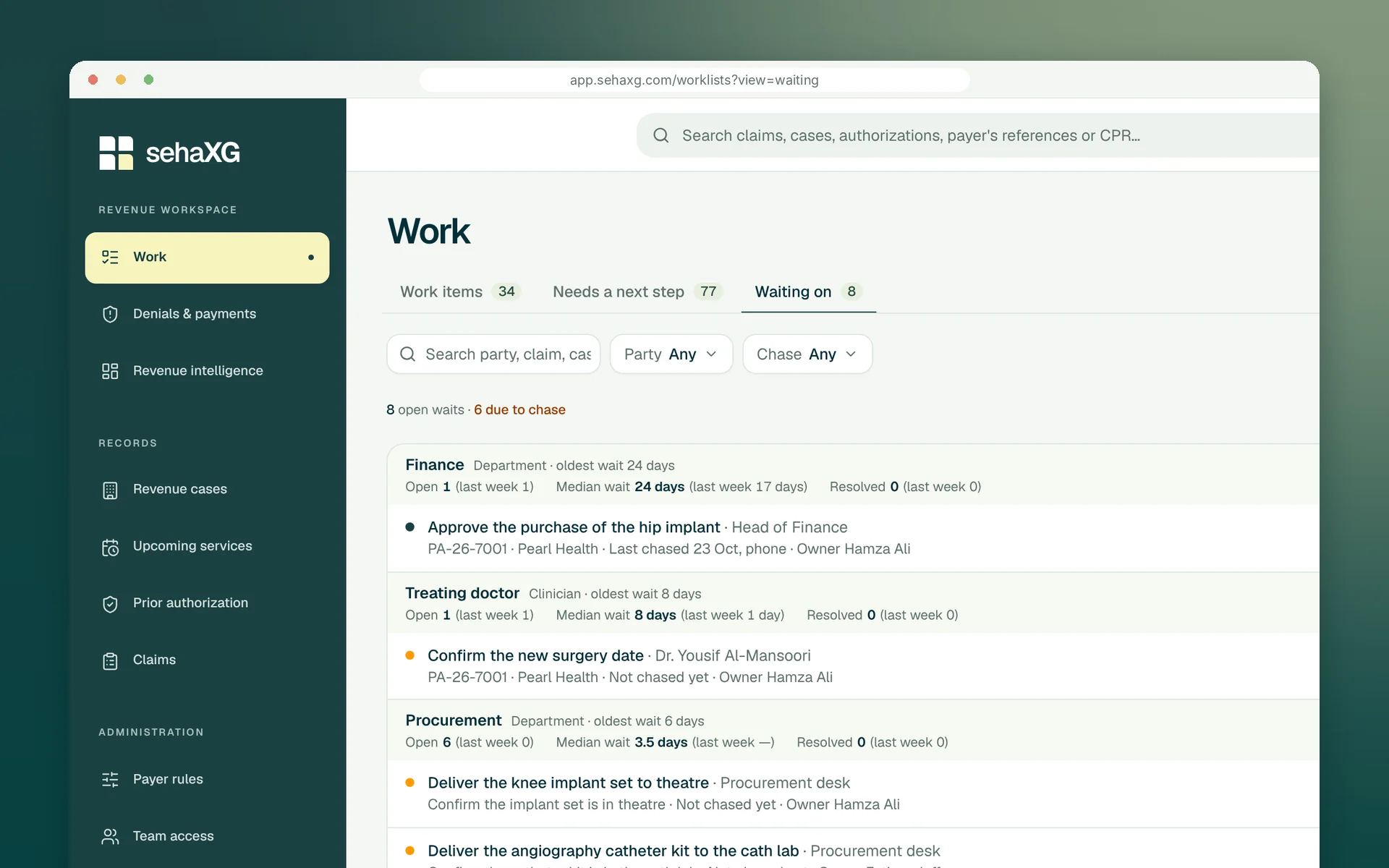
When a case is waiting on someone outside the team, the wait is recorded: who holds it, since when, the last chase and the next. When waits pile up on one desk, the manager hears about it without walking the corridors.
Intelligence · learned rules
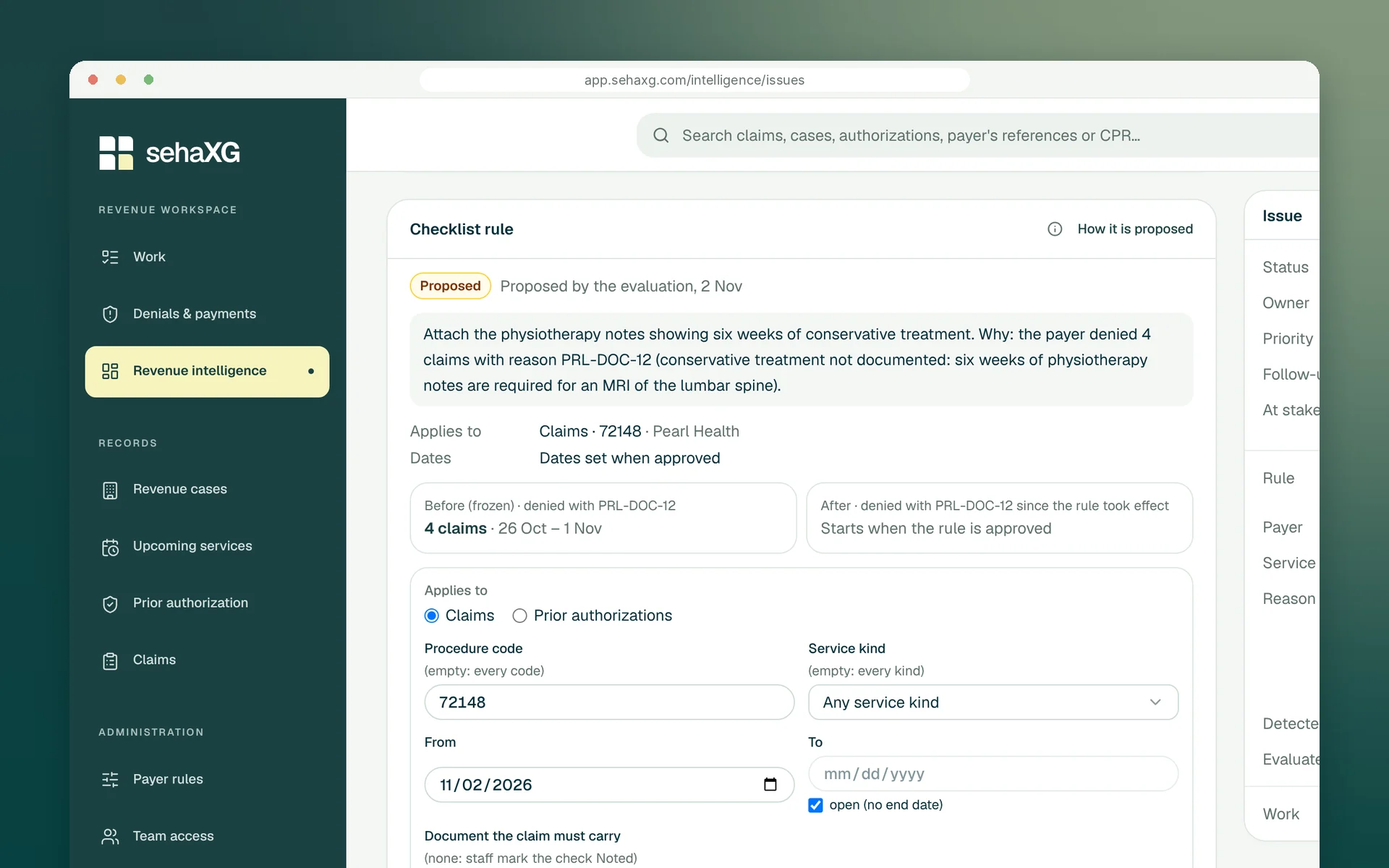
When a payer denies the same service for the same reason several times, sehaXG proposes a checklist rule. A manager approves it, the next claim is checked before it goes out, and the before and after counts show whether it worked.
Intelligence · before it goes out
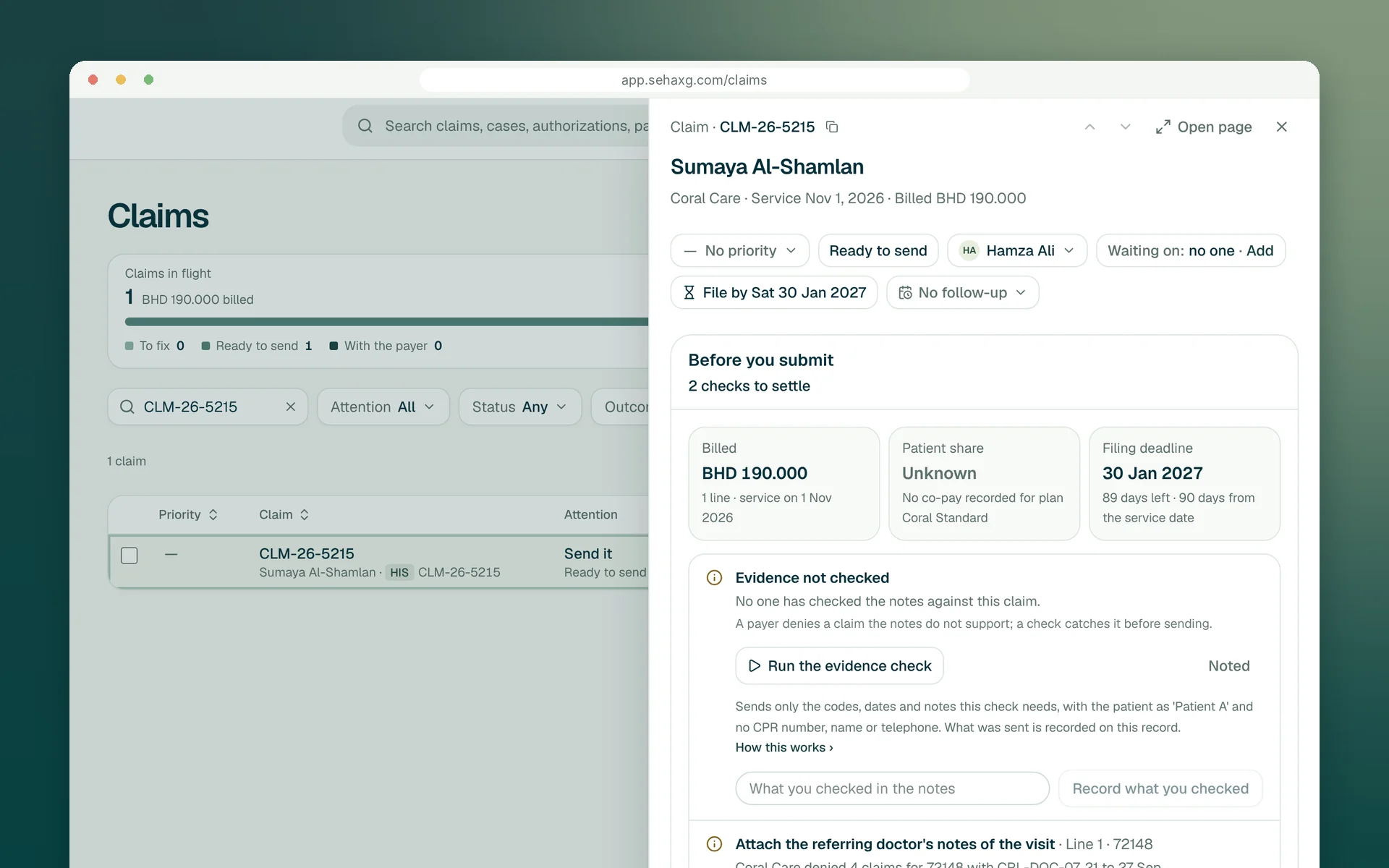
Claims and prior-authorization requests are checked against the payer's rules and your own learned rules before they are sent, with what to fix and a quick way to fix it.
Intelligence · negotiation files
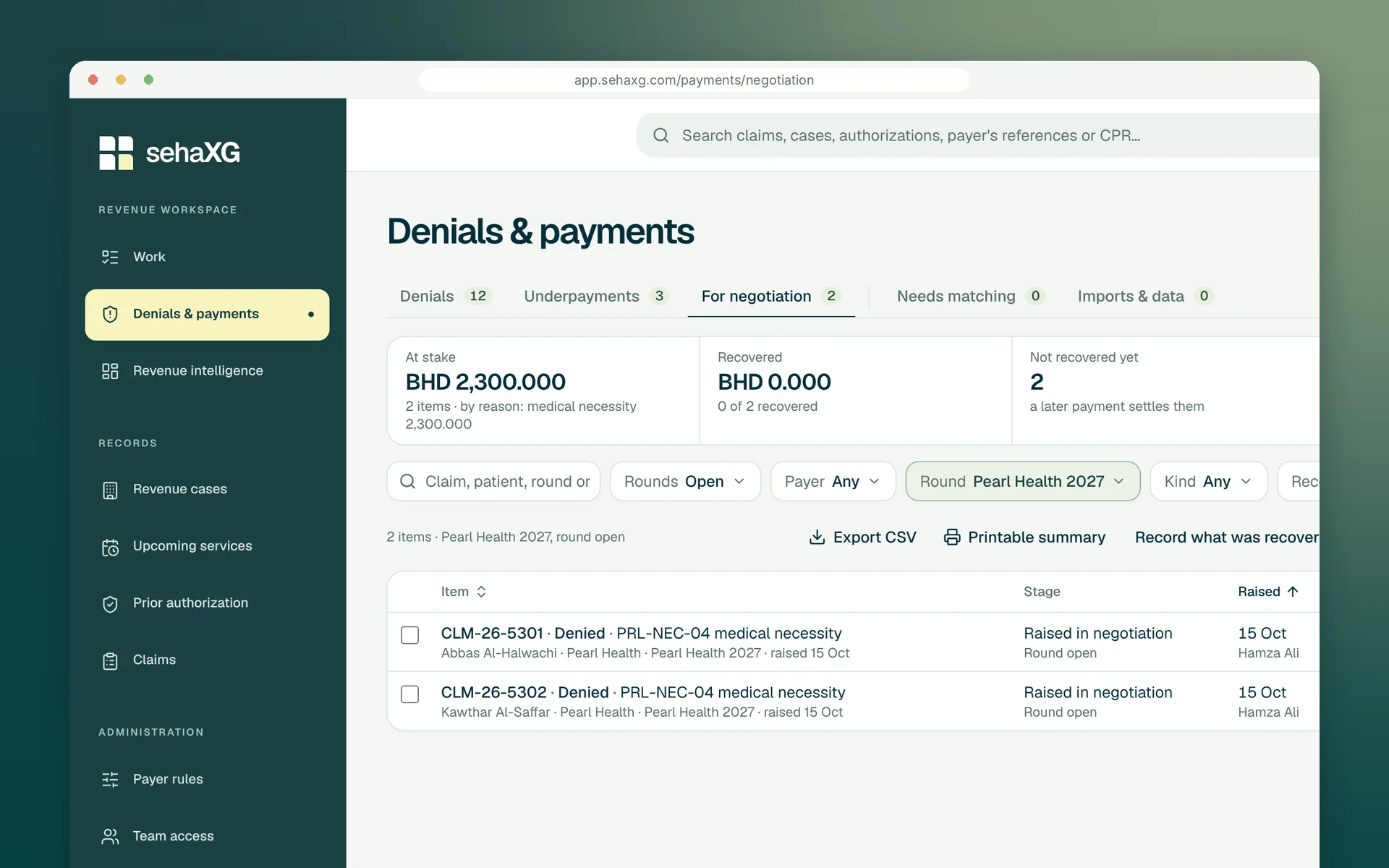
Raise a denial into the payer's negotiation round as it happens, with why it shouldn't have been denied. By the meeting the file is ready: amounts by reason, one page to print, and what was recovered afterwards.
Intelligence · numbers
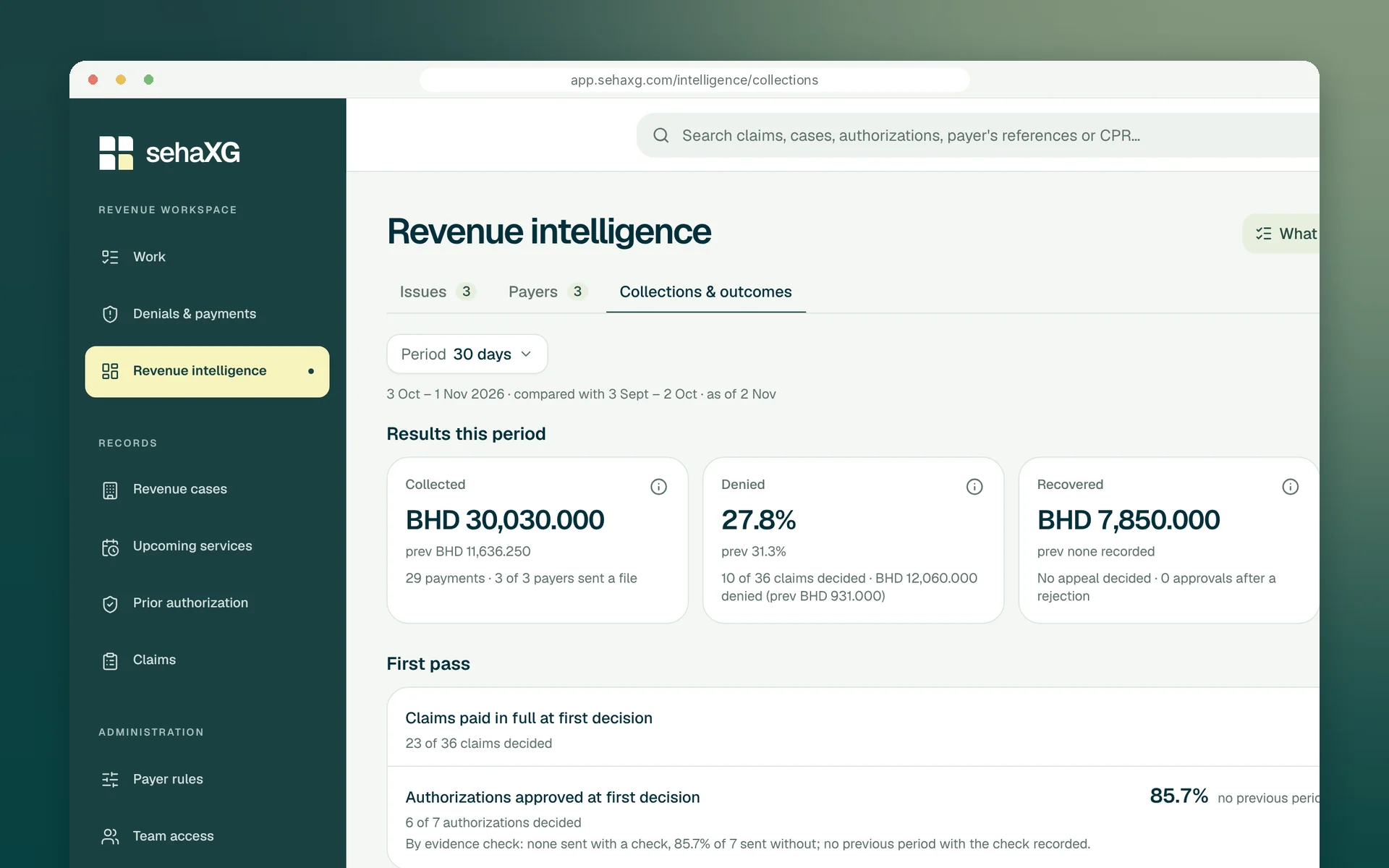
Collected, recovered and paid in full at the first decision, each against the period before and each saying how it is counted, so the figures hold up when someone asks what the revenue team brings in.
AI agents
Agents check claim and authorization statuses and prepare and submit claims, authorization requests and appeals through digital channels. They work inside owned cases, run the same checks before they submit, and return exceptions to the case owner with what they found.
Digital follow-up, with a clear record.
Case scope verified
Preparing context
The reviewer sees the evidence and intended destination before the agent continues.
A little more clarity
Running the revenue cycle as one piece of work, from the patient's first call to the payment. Every case has an owner, a next step and a date; hand-offs between departments are tracked; waits on others are named and chased. sehaXG is the place that work is run.
No. Your hospital system stays the record of care. sehaXG takes its appointment lists and claims, and your payers' files, and runs the revenue work around them: owners, hand-offs, waits and follow-up.
It watches your payers' decisions. When the same service is denied for the same reason several times, it proposes a checklist rule from the payer's own reason. A manager approves, edits or rejects it; approved rules check the next claims before they go out, and the counts before and after show whether the rule worked.
Yes. Each claim carries its expected payment: what the hospital's payer terms say it should pay (the payer's price list and rules, less the patient's share), with that source shown. When the payment arrives it is compared with it; the payer decides what it pays.
They check claim and authorization statuses, and prepare and submit claims, authorization requests and appeals through digital channels, inside the cases your team owns. They stop for a person wherever your rules say so, every step is recorded with the case, and they don't make phone calls: a case that needs a conversation goes to its owner.
Let’s move forward
Bring a case that stalled between departments. We'll show where it would sit in sehaXG, who would own it, what it is waiting on and what happens next.
Request a demo