From the first call to the payment: three habits of a revenue team that gets paid
Revenue cycle management starts when a patient calls and ends when the hospital is paid. Three habits keep the money moving in between: owners, rules and reasons.
THE SEHAXG BLOG
Clear thinking about claims, payment, and the decisions that help Bahrain's healthcare teams protect the revenue behind care.
INSIGHTS & PERSPECTIVES
18 articlesNewest first

Revenue cycle management starts when a patient calls and ends when the hospital is paid. Three habits keep the money moving in between: owners, rules and reasons.

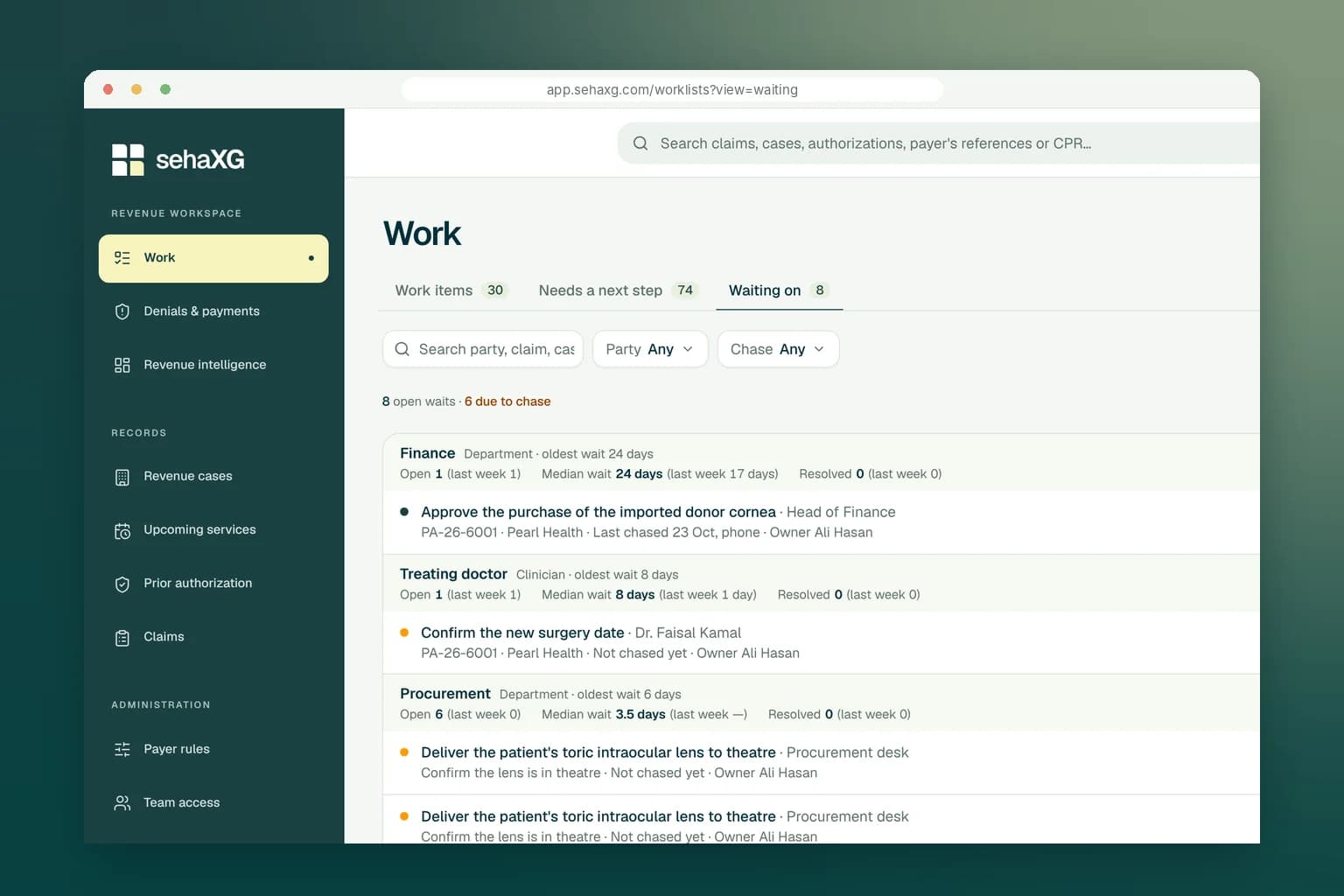
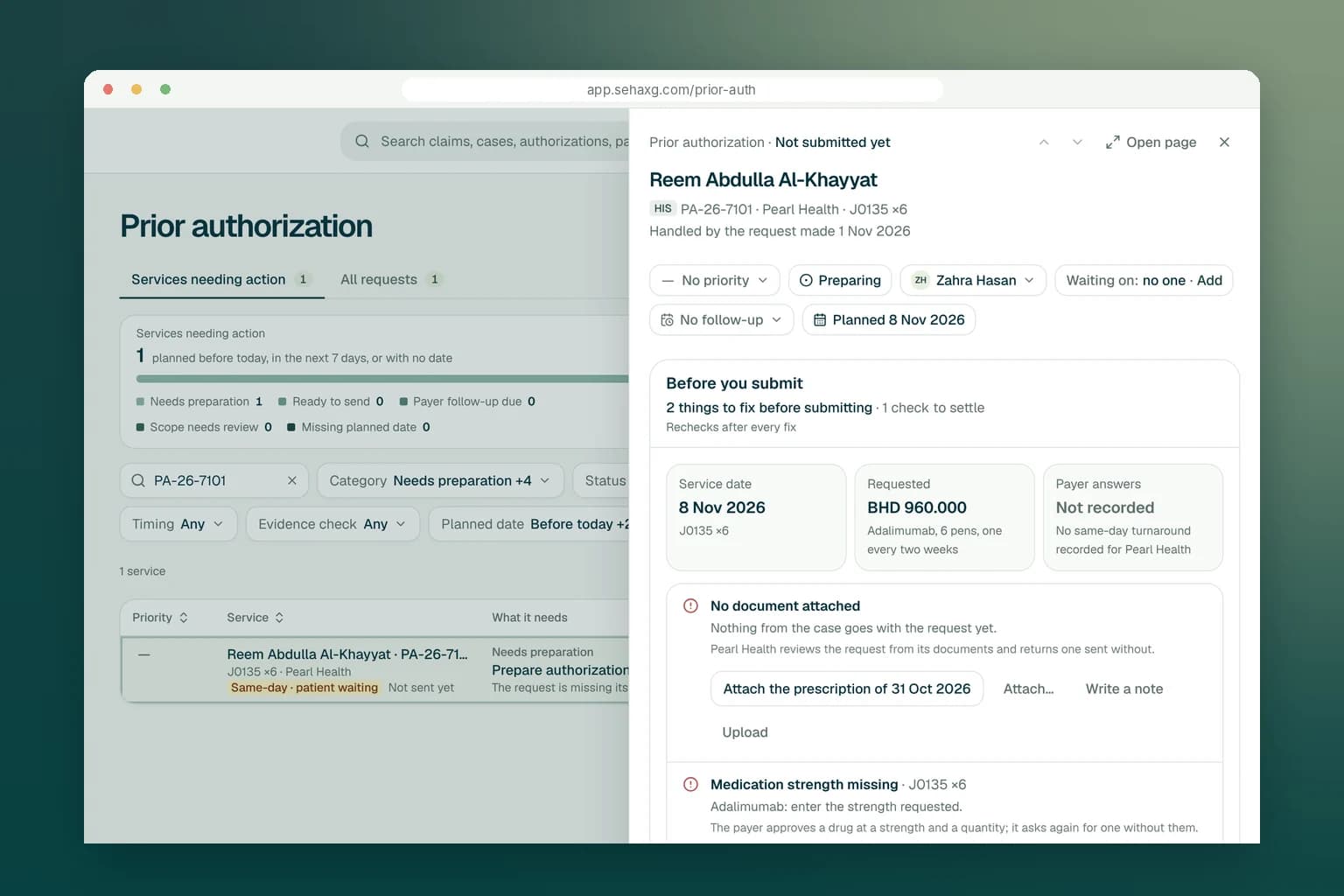
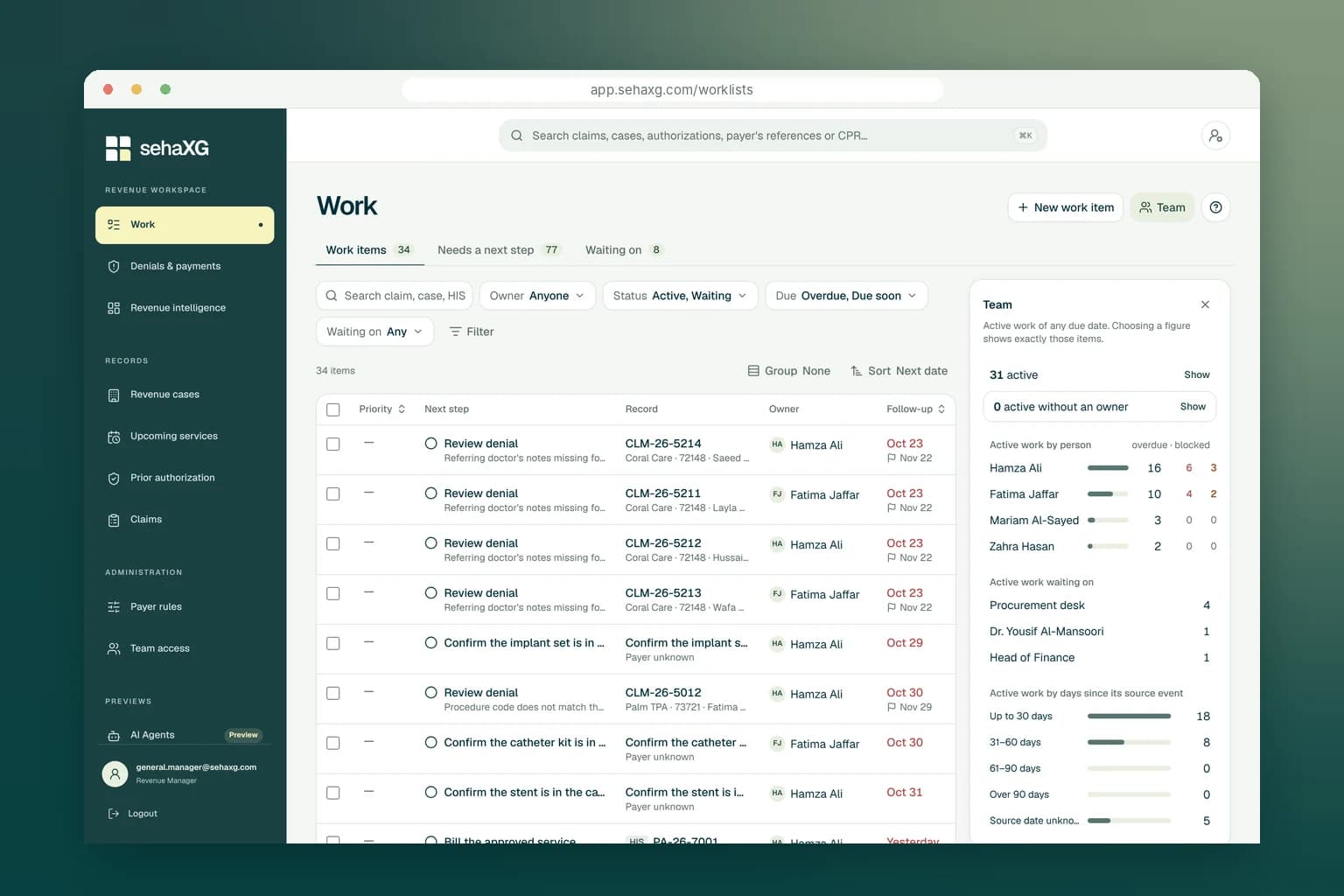
Revenue rarely goes missing in one big mistake. It slips through hand-offs. Here is how to give every case a name, a next step and a date, from the first call to the payment.

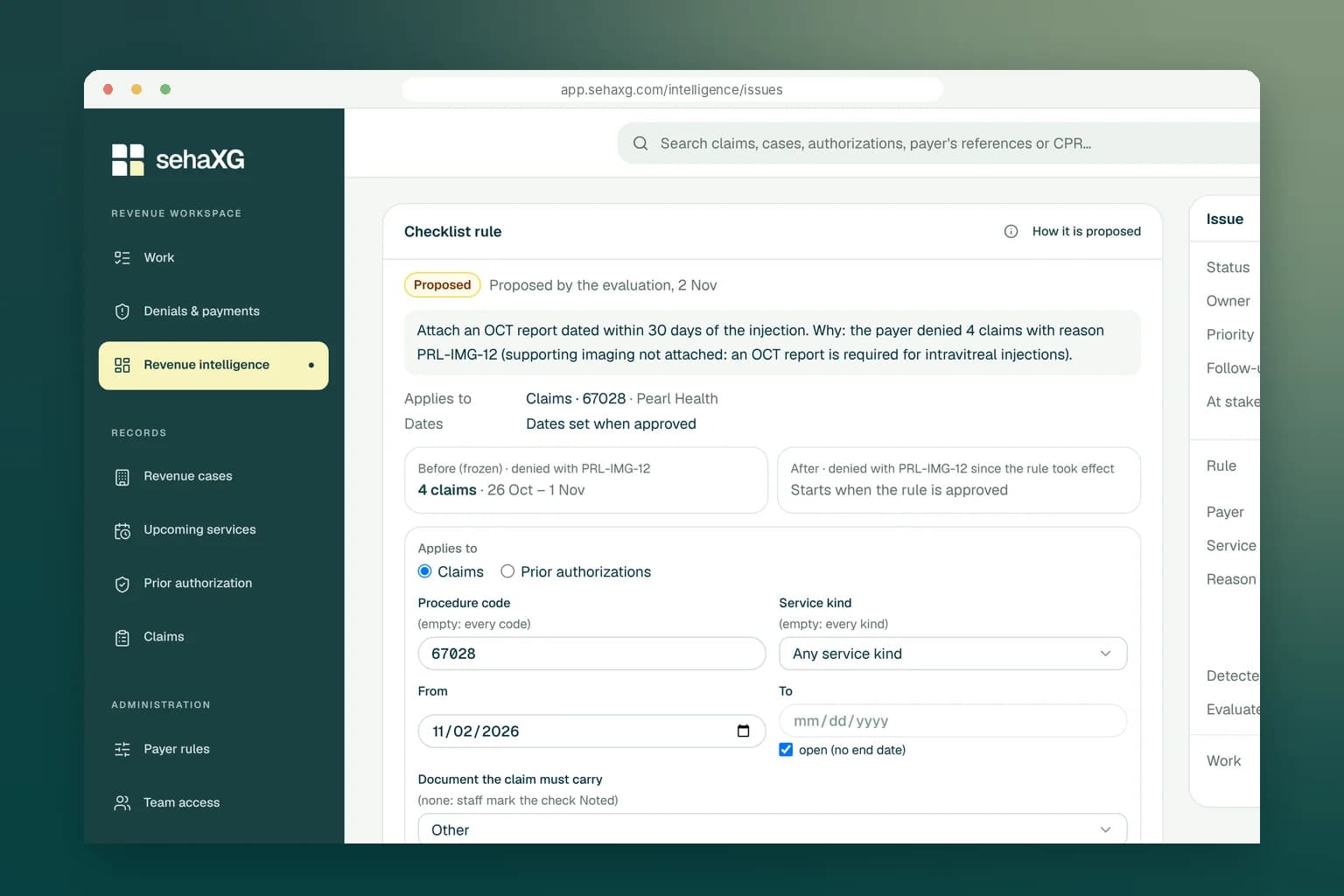
Your best billers know which payer wants which report. Here is how to turn their know-how, and your own denials, into checks every claim goes through.

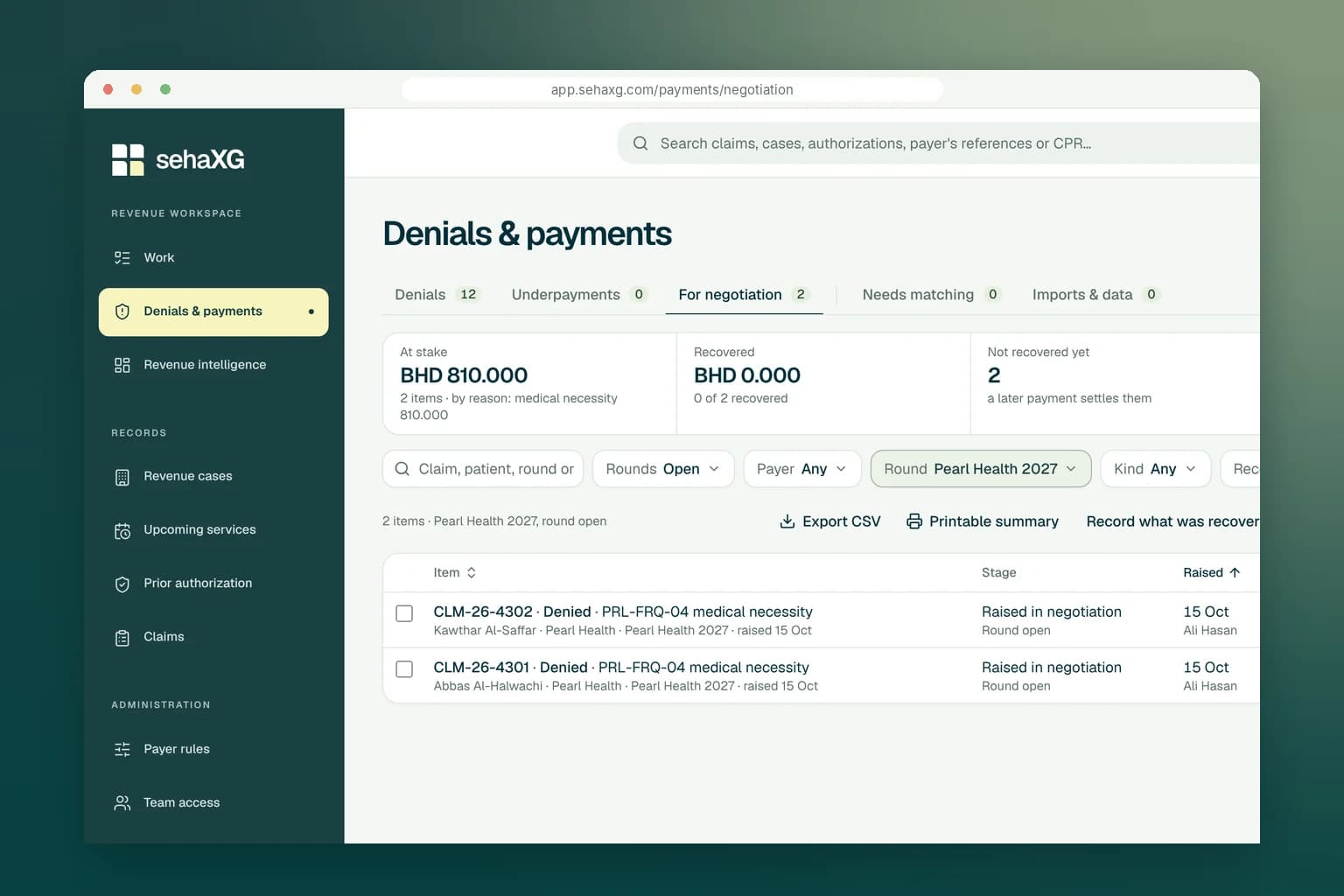
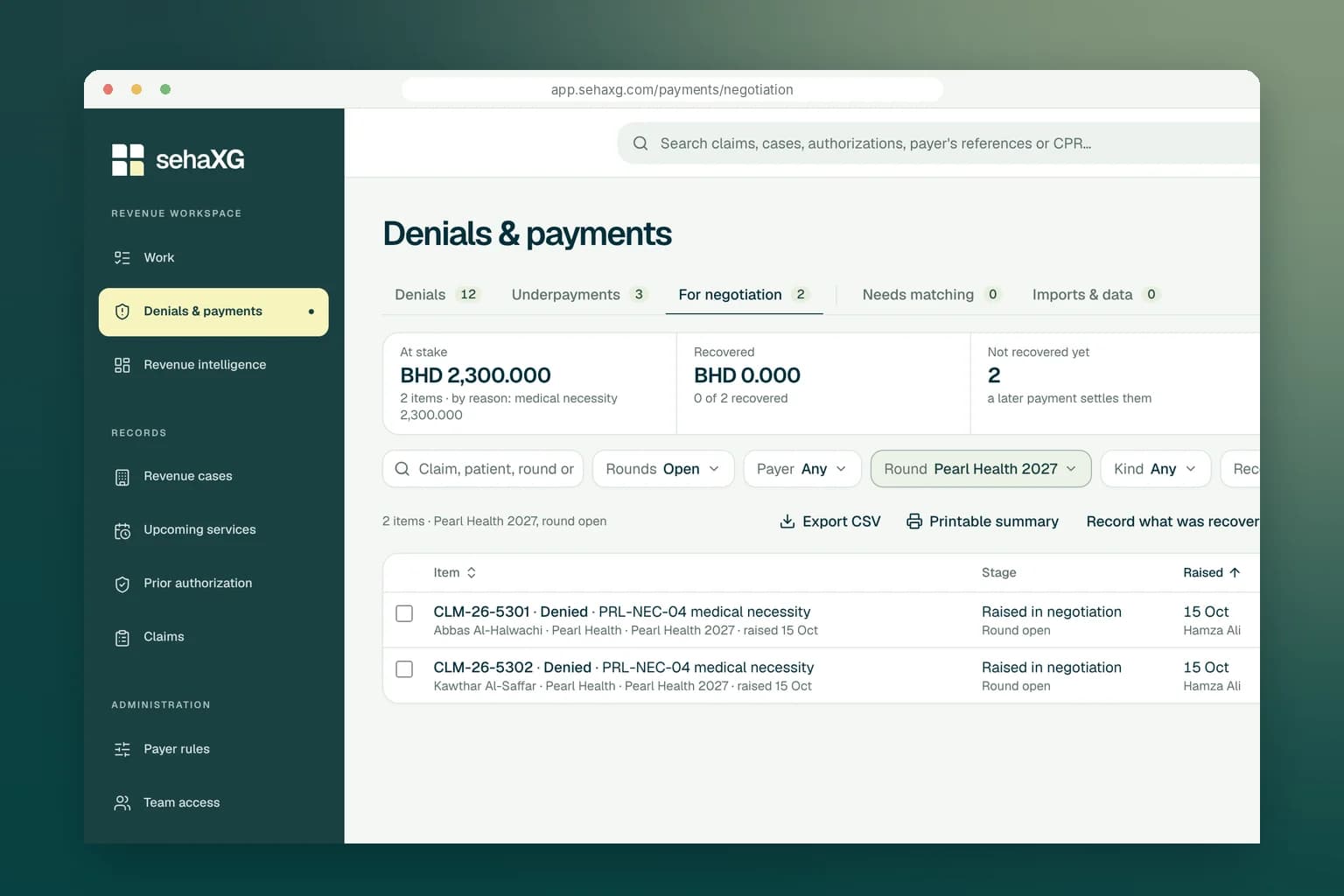
A pile of denied claims won't move an insurer at contract time. A case for each claim, with why it shouldn't have been denied, will.

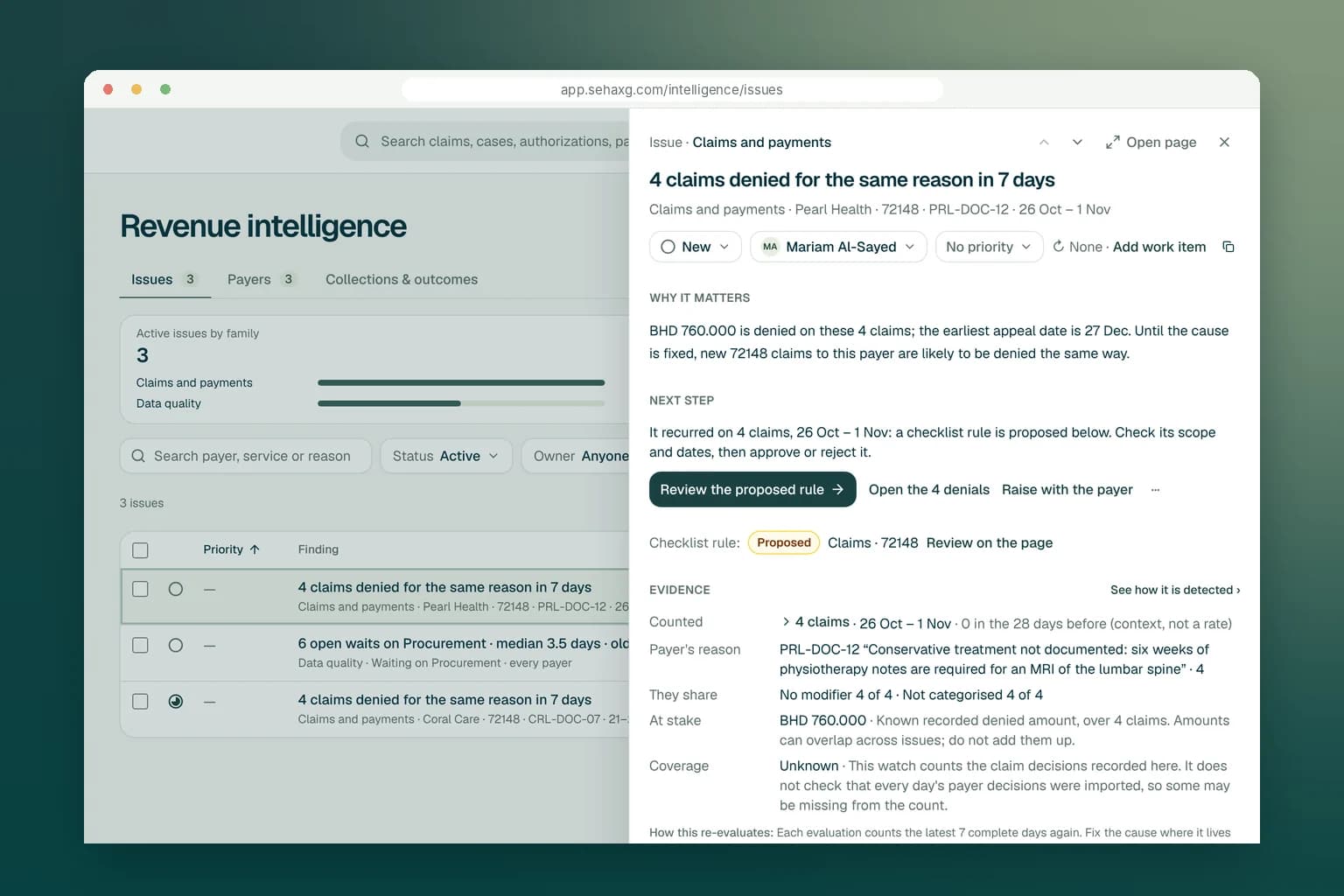
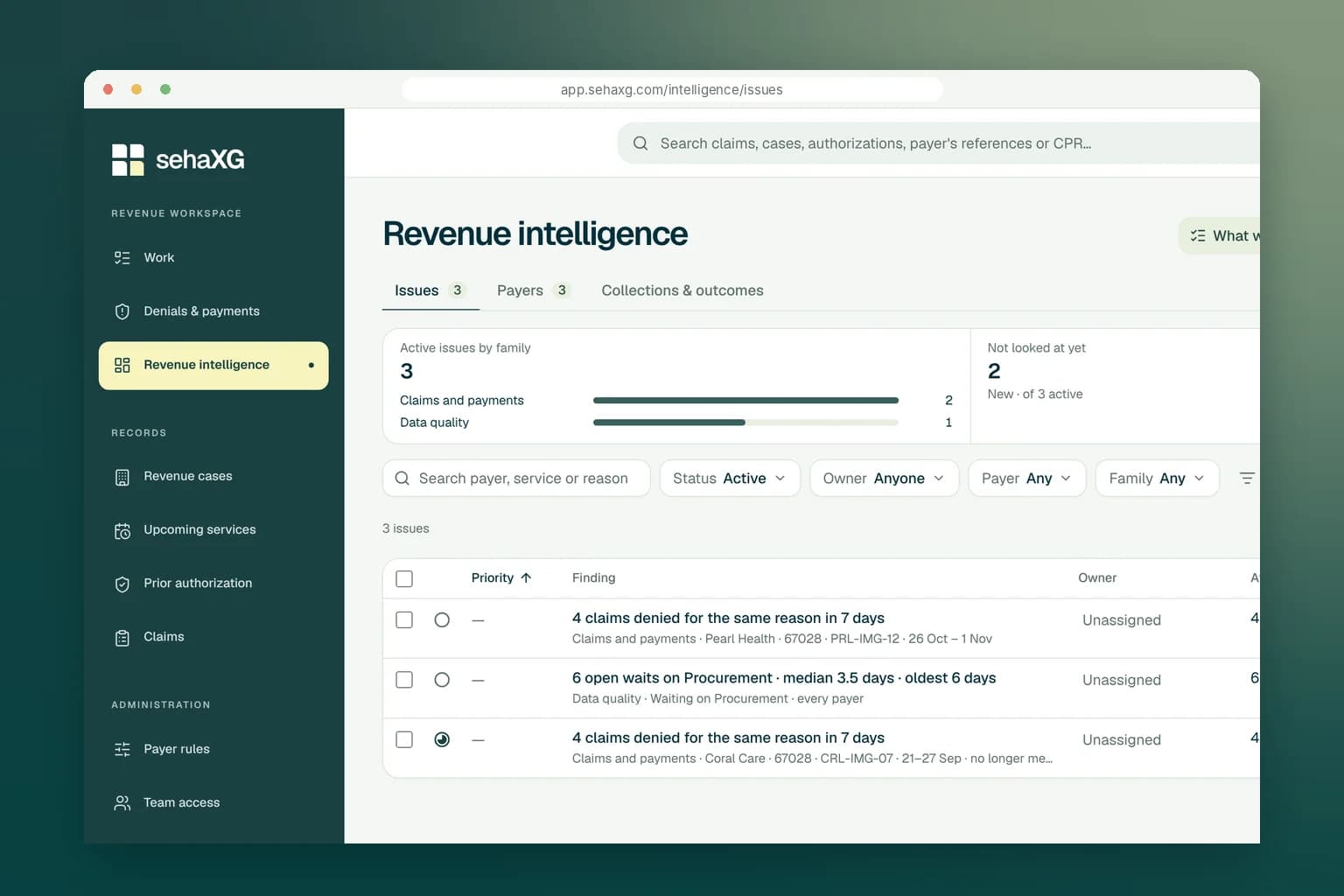
How Bahrain healthcare teams can spot emerging denial patterns, fix claim and approval bottlenecks, and bring insurer evidence into contract discussions.
A Bahrain underpayment audit: calculate expected payment, reconcile the remittance and pursue only real contract variances.

A pre-visit workflow for checking coverage, approval requirements, evidence, status and the reference that must reach the claim.

Build an evidence pack from denial reasons, contract terms, appeals and payment patterns before an insurer discussion.

Prioritise A/R follow-up by recoverable BHD, deadline, likelihood and effort instead of age or balance alone.
Explore how sehaXG turns revenue signals into focused work.
Explore the platform