A list that tells you what's next
Owners, next steps, follow-up dates and waits, from the visit's approval to the payer's answer.
Explore OrchestrationFor revenue cycle teams
Every case on your list has an owner, a next step and a date; approvals arrive as billing work; denials come routed by their reason. Claims and authorization requests are checked against your own learned rules before they go out, and agents take the status checks and digital submissions.
Built around your team
Your team already knows what the payers want. sehaXG keeps that knowledge in the system: the work is owned and ordered, and what your best people learned from each denial is checked on every claim.
Read: Experience in the system, not in headsOwners, next steps, follow-up dates and waits, from the visit's approval to the payer's answer.
Explore OrchestrationChecks before submission, with the rules learned from your denials, and a route for each denial by its reason.
Explore IntelligenceAgents check statuses and submit claims, authorization requests and appeals once the checks pass.
Explore AI AgentsA closer look
Owned work first, intelligence on top, and AI agents for the repetitive digital steps.
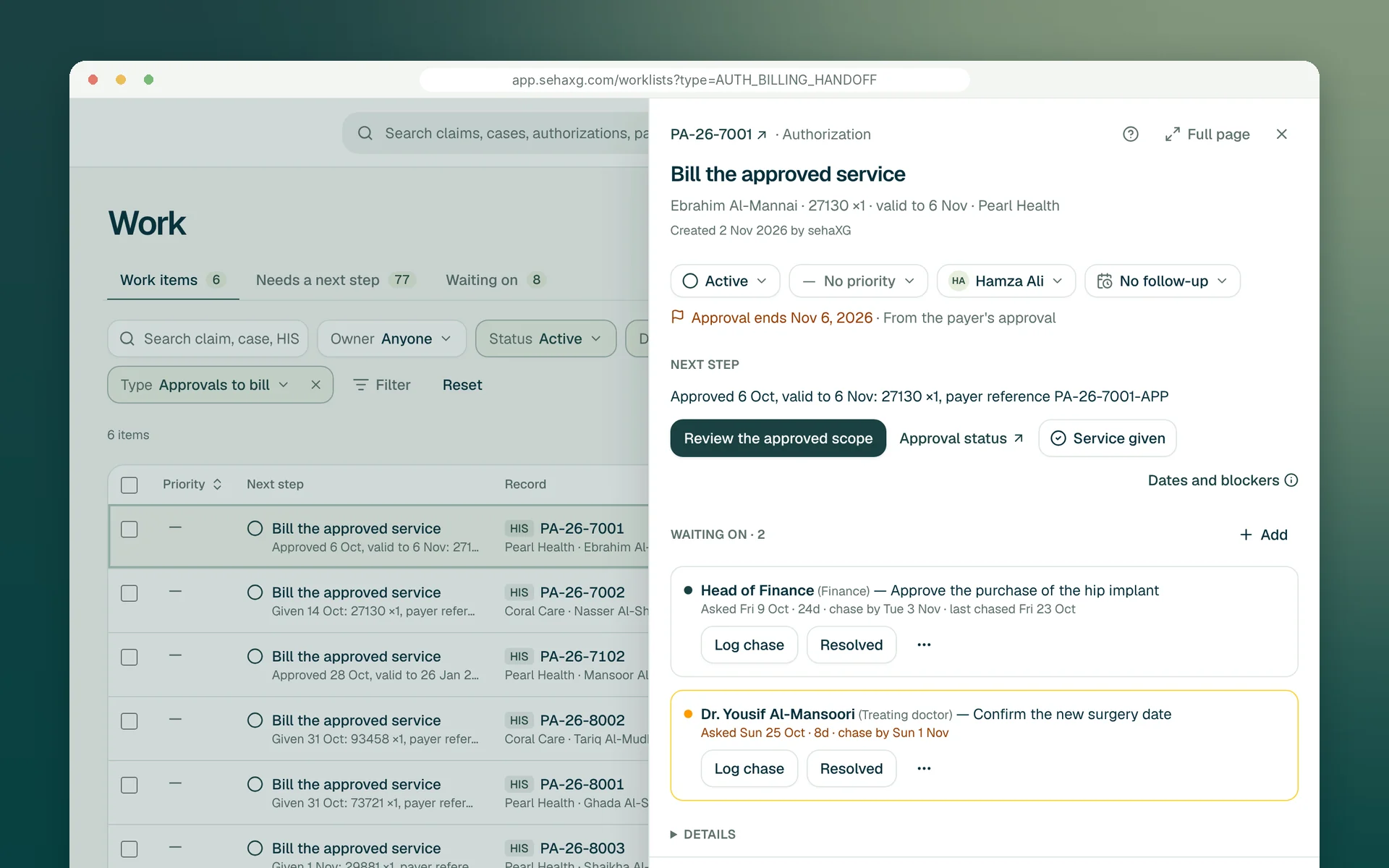
Approvals to bill
Each approval becomes a billing item with the approval's end date, owned by the person named for that payer. Waits on Finance or the surgeon sit on the same item, chased on time.
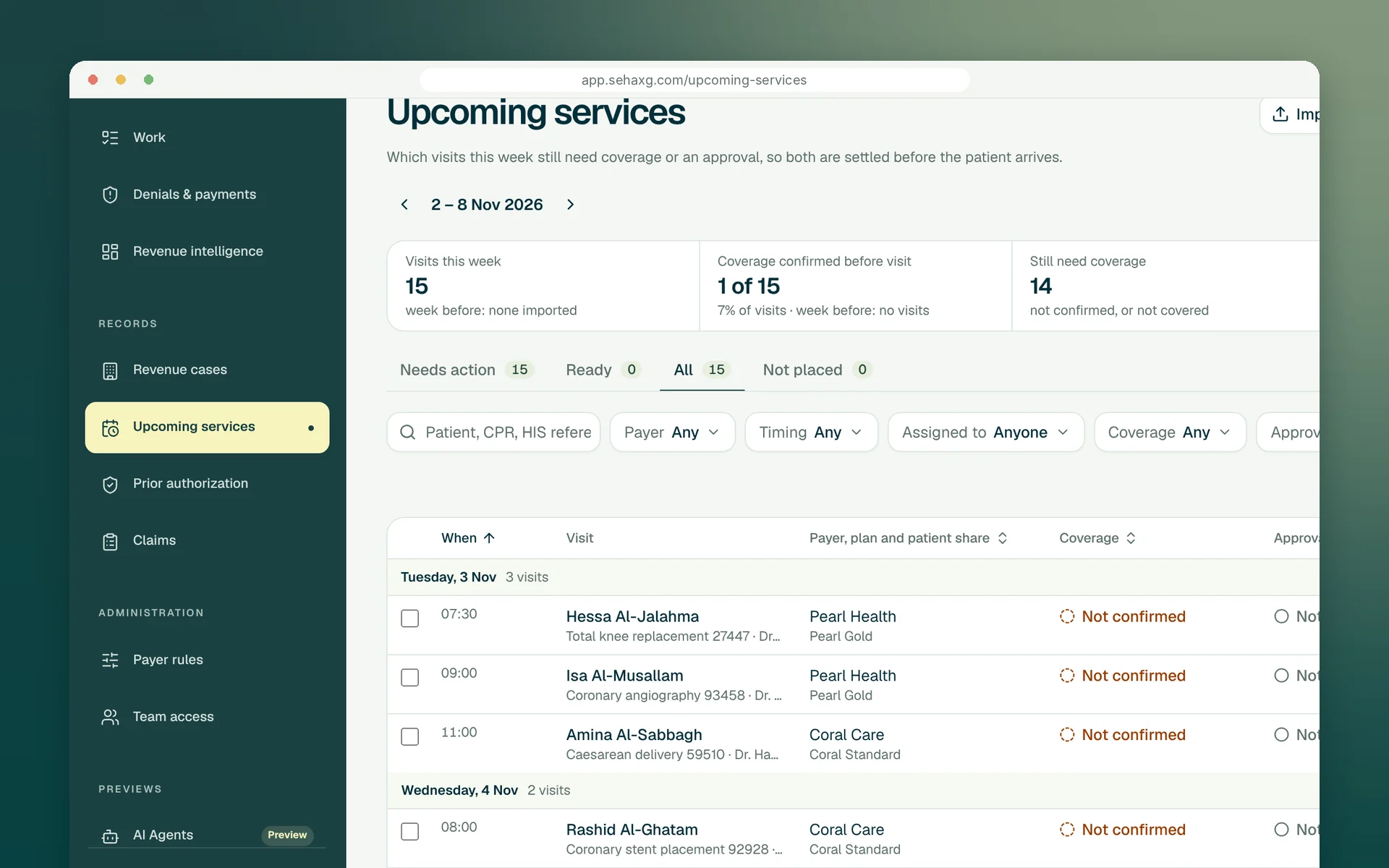
Before the visit
Next week's appointments arrive from your hospital system with each visit's coverage and approval assigned to a named person.
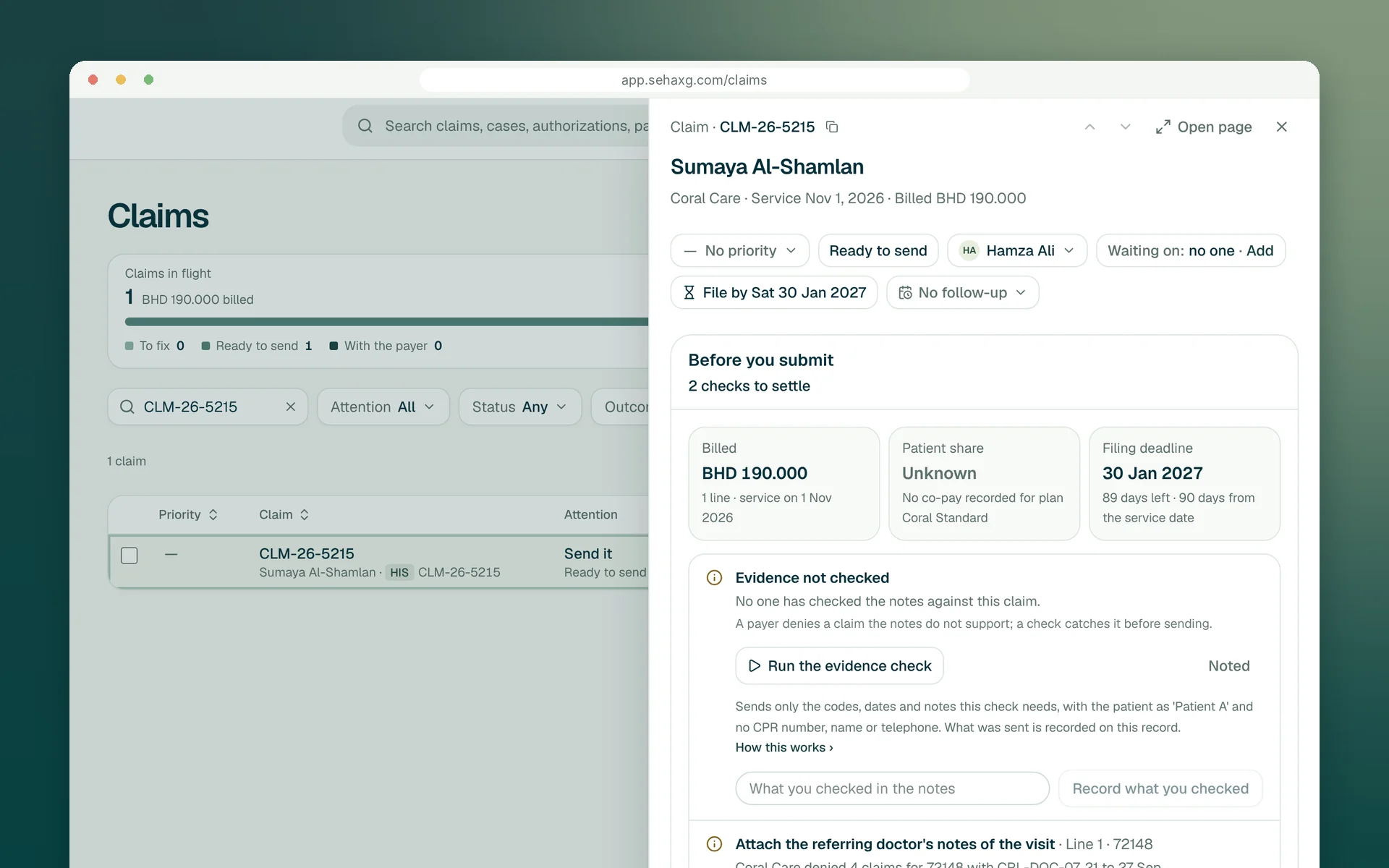
Before you submit
Each claim is checked against the payer's rules and the rules your managers approved from repeated denials, with where the rule came from and a quick way to fix the gap.
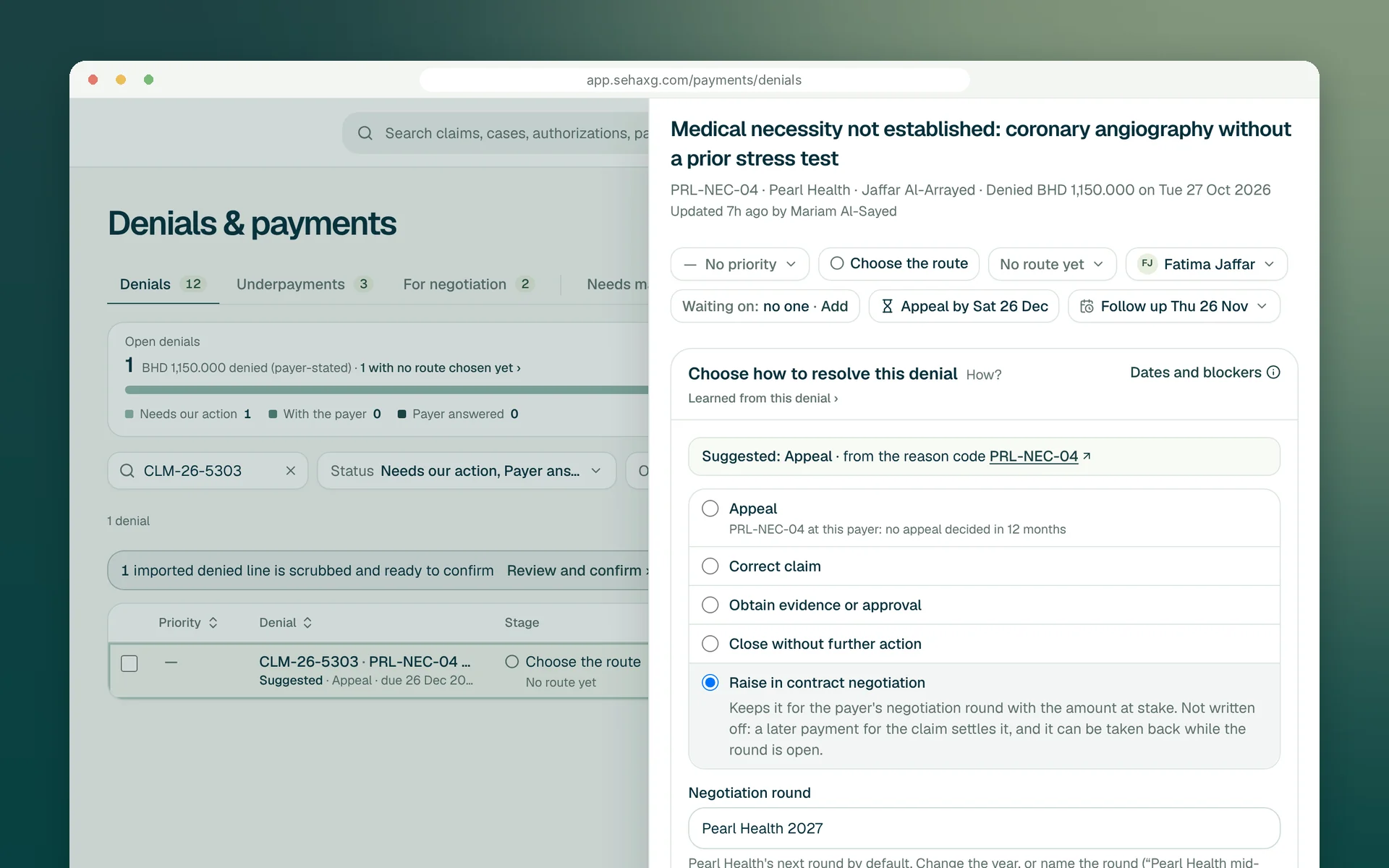
Denials by reason
Denials arrive from the payer's file with a suggested route from the reason code (correct the claim, appeal, or raise it in negotiation), an owner and the appeal deadline.
Digital follow-up
Agents check claim and appeal statuses, record the payer's response, and submit approved claims, authorization requests and appeals, bringing exceptions back to you with the history ready.
Digital follow-up, with a clear record.
Case scope verified
Preparing context
The reviewer sees the evidence and intended destination before the agent continues.
A little more clarity
Your Work list shows each item's next step, owner, follow-up date and what it is waiting on, sorted by what is due. Approvals to bill, denials and waits all arrive there.
It checks the claim against the payer's rules and your learned rules, shows the expected payment and its source, and flags missing documents or details with a quick fix.
No. It is what the hospital's payment terms say the claim should pay. The payer decides what it pays, and the payment that arrives is compared with it.
They check claim and authorization statuses, and prepare and submit claims, authorization requests and appeals through digital channels, inside the cases your team owns. They stop for a person wherever your rules say so, every step is recorded with the case, and they don't make phone calls: a case that needs a conversation goes to its owner.
Let’s move forward
Bring a denial that keeps coming back. We'll show the rule it would teach and the next claim checked before it goes out.
Request a demo