Every dinar has an owner
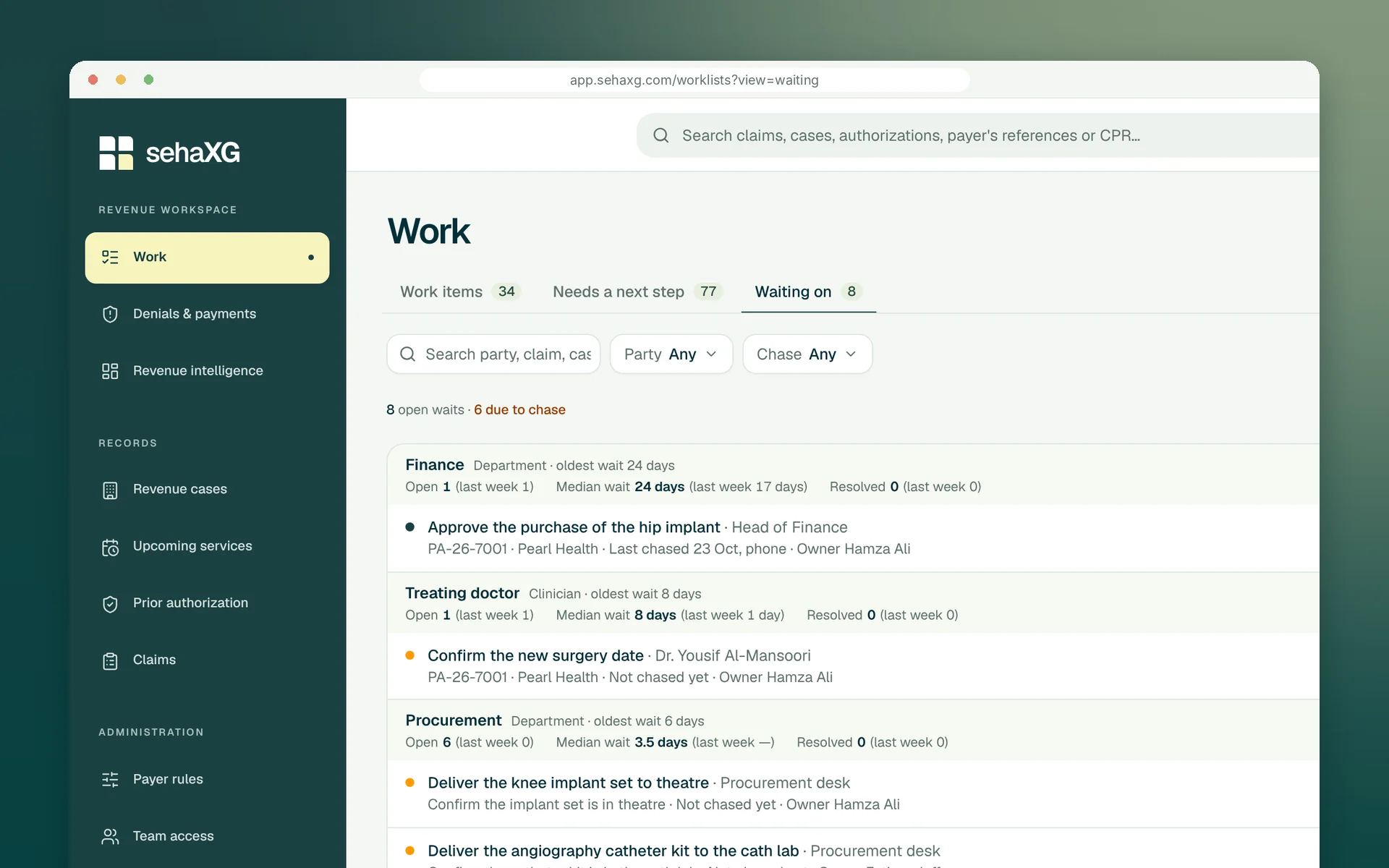
A name, a next step and a date on every case, and every wait on another department on the record.
Explore OrchestrationWhy sehaXG
sehaXG is revenue orchestration for healthcare in Bahrain: run your revenue cycle from the first call to the payment, learn from your own denials, and put AI agents on top. We believe agents only help once the work underneath them is owned and right.
Built around your team
They are cases nobody owns, lessons nobody wrote down and denials nobody argued. An approval that expired while the case sat with Finance. A denial a senior biller would have prevented. A claim written off because nobody had time to explain why it should be paid. We build for those gaps first.
Read: three habits of a revenue team that gets paidA name, a next step and a date on every case, and every wait on another department on the record.
Explore OrchestrationApprovals become billing work before they lapse; waits are chased on time and raised when they pile up.
Rules proposed from your own denials, approved by your managers, checked on every claim.
Explore IntelligenceA reason for every disputed claim, ready for the payer negotiation, and numbers that defend your team.
Agents check statuses and submit claims, authorization requests and appeals, inside owned cases.
Explore AI AgentsAmounts in Bahraini dinars, and the way Bahrain's hospitals, clinics and payers work.
A closer look
Owned work first, intelligence on top, and AI agents for the repetitive digital steps.
Our mission
Give every case an owner, a next step and a date, and make every wait between departments visible, so a stuck case is seen while there is still time to act.
Our focus
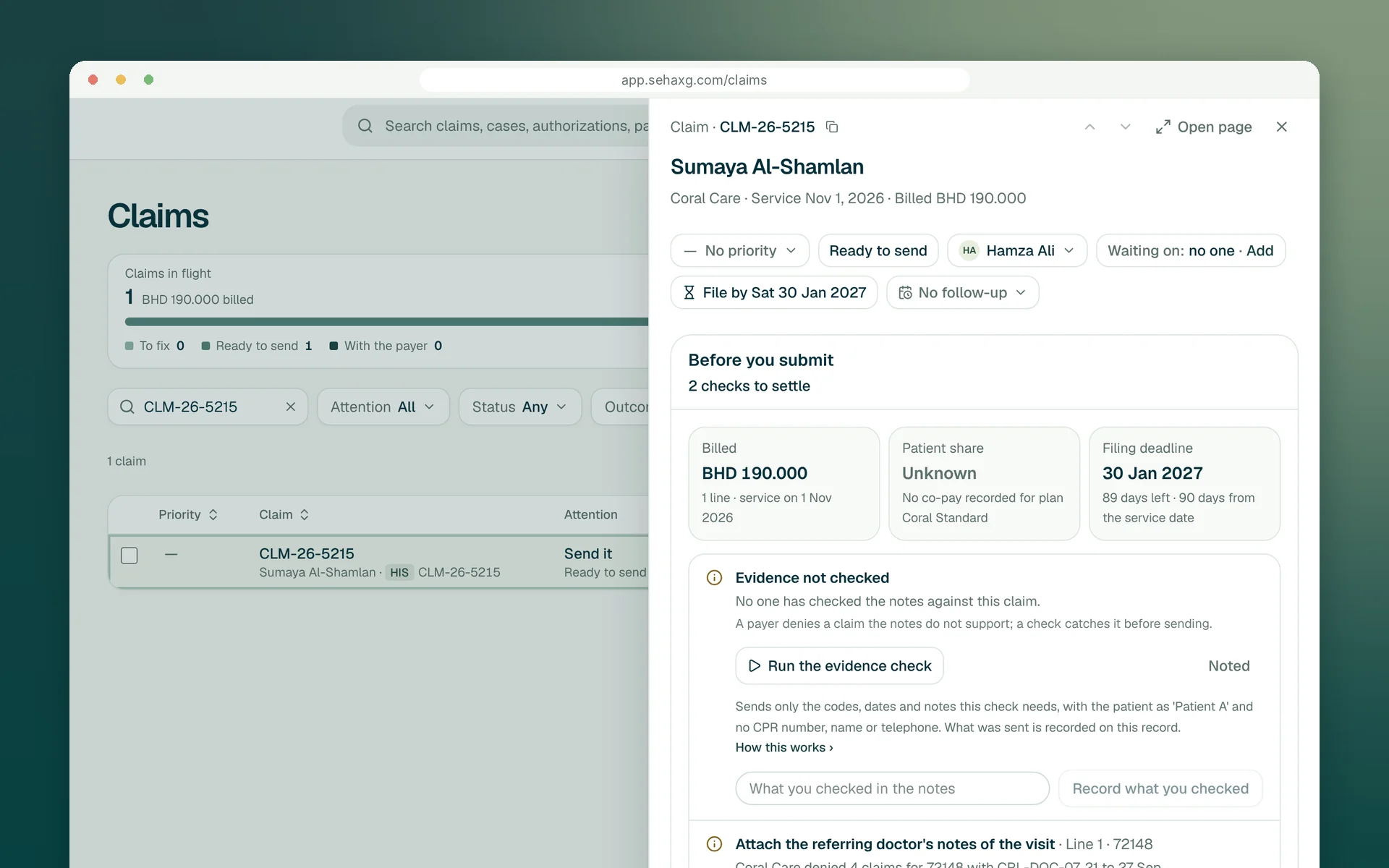
Check claims and authorization requests against the payer's rules and the rules learned from the hospital's own denials, before submission rather than after the denial.
Our vision
Give digital agents specific jobs (check a status, submit a claim, an authorization request or an appeal) on owned cases with the hospital's rules, and keep every step visible.
Digital follow-up, with a clear record.
Case scope verified
Preparing context
The reviewer sees the evidence and intended destination before the agent continues.
A little more clarity
Because most revenue is lost between people, not inside one task. Agents can't fix a case nobody owns. Once every case has an owner and every wait is visible, intelligence and agents have something reliable to work on.
It shows what your payment terms say a claim should pay, not a guaranteed payer outcome. Your team can see the price, rule and patient share behind it.
They check claim and authorization statuses, and prepare and submit claims, authorization requests and appeals through digital channels, inside the cases your team owns. They stop for a person wherever your rules say so, every step is recorded with the case, and they don't make phone calls: a case that needs a conversation goes to its owner.
Let’s move forward
A case that stalled between departments, a denial that keeps coming back, or a contract meeting coming up. Pick one, and see it working on your own cases.
Explore our solutions