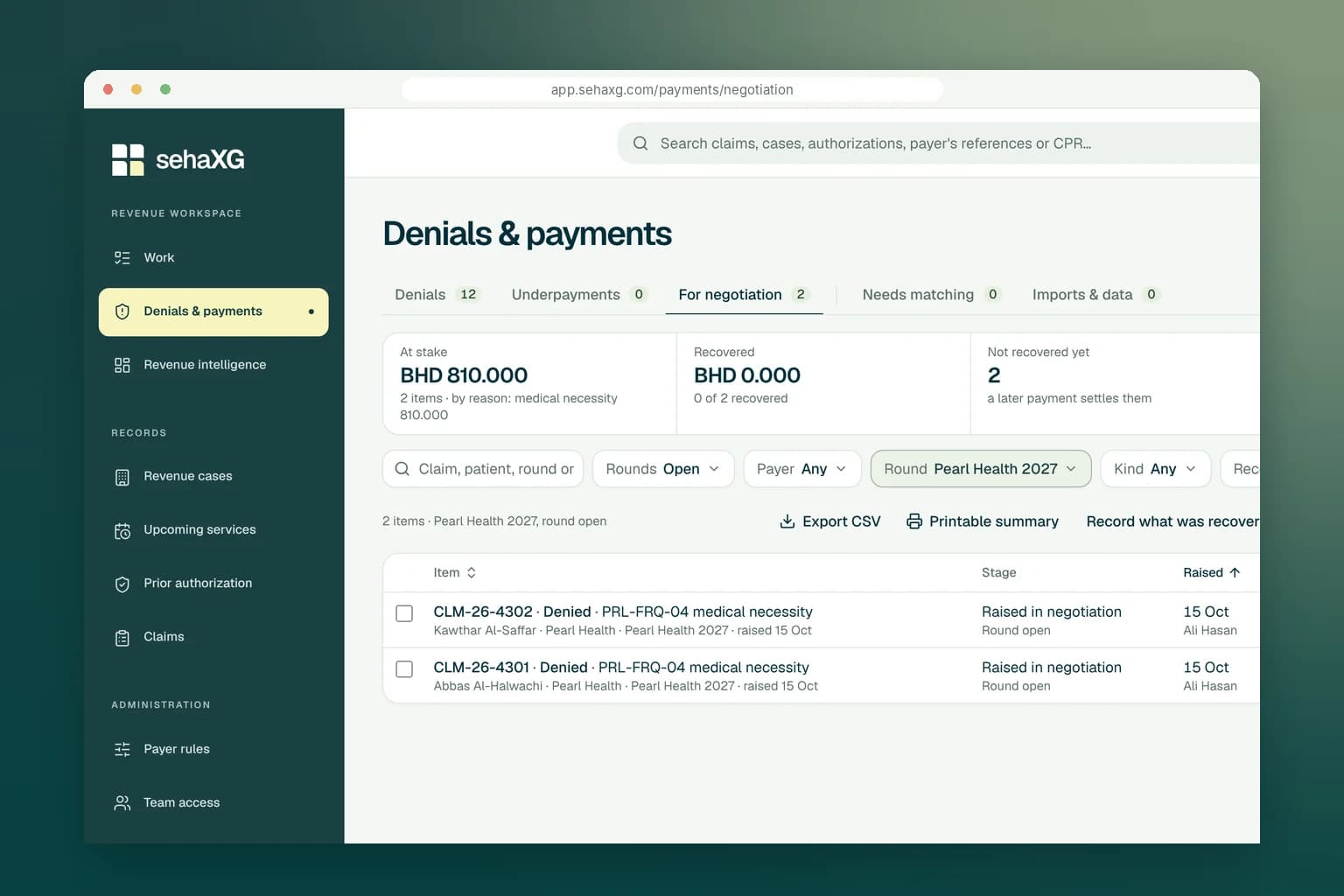
Contract season arrives and someone exports every denied claim from the year. The insurer looks at the list and asks what any of us would: so what? A list says you are unhappy. It doesn't say why each claim should be paid, and that is what an insurer will actually re-review.
01 / THE PROBLEM
A list of claims isn't an argument
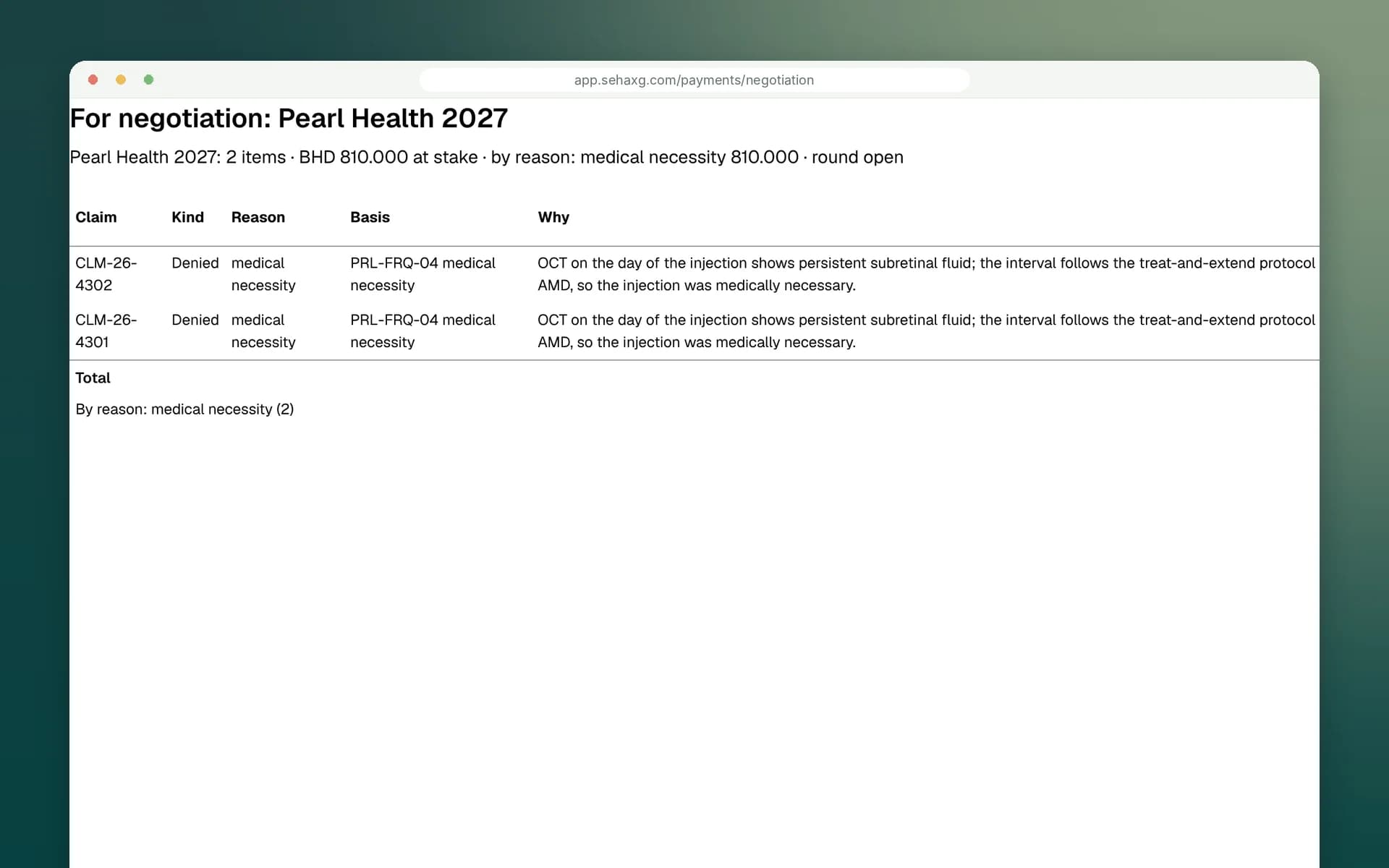
Insurers re-review claims one at a time, against a reason. If your file says “these 40 claims, BHD 16,000”, the conversation stops at the total. If it says “these two injections were denied for frequency, but the OCT on the day shows persistent fluid, so the interval follows the treat-and-extend protocol”, there is something to agree with.
The work is collecting those reasons during the year, while the person who handled the case still remembers it, not in the week before the meeting.
02 / STEP 1
Raise a denial into the round, with its why
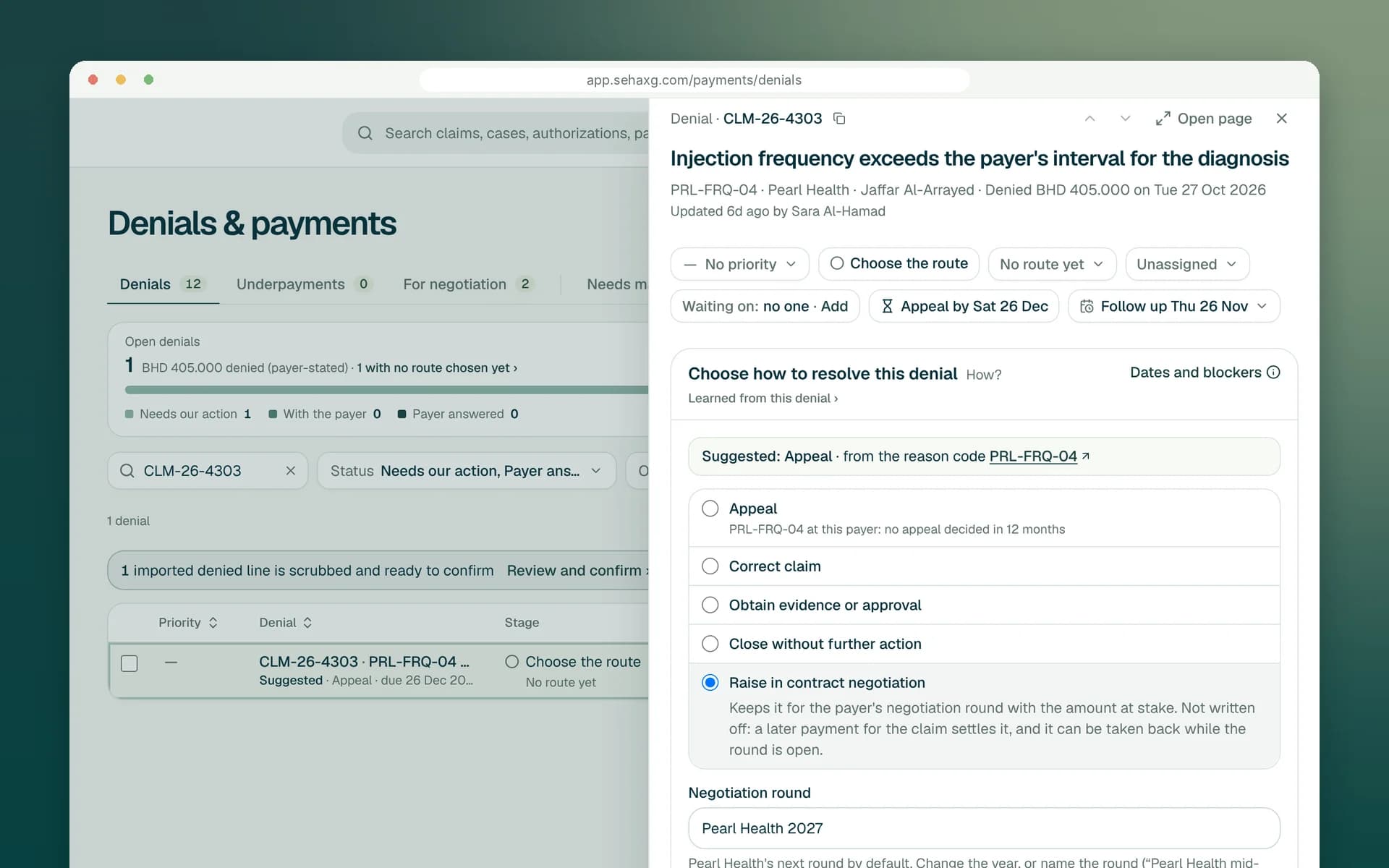
Some denials are better argued at the table than through an appeal. From the denial, choose Raise in contract negotiation. It goes into the payer's next round, keeps the amount at stake, and asks for one thing: why it shouldn't have been denied. The payer's reason is filled in, and your team adds the clinical argument.
It isn't written off. If the insurer pays the claim later, the payment settles it, and it can be taken back while the round is open.
03 / STEP 2
One file per payer, ready all year
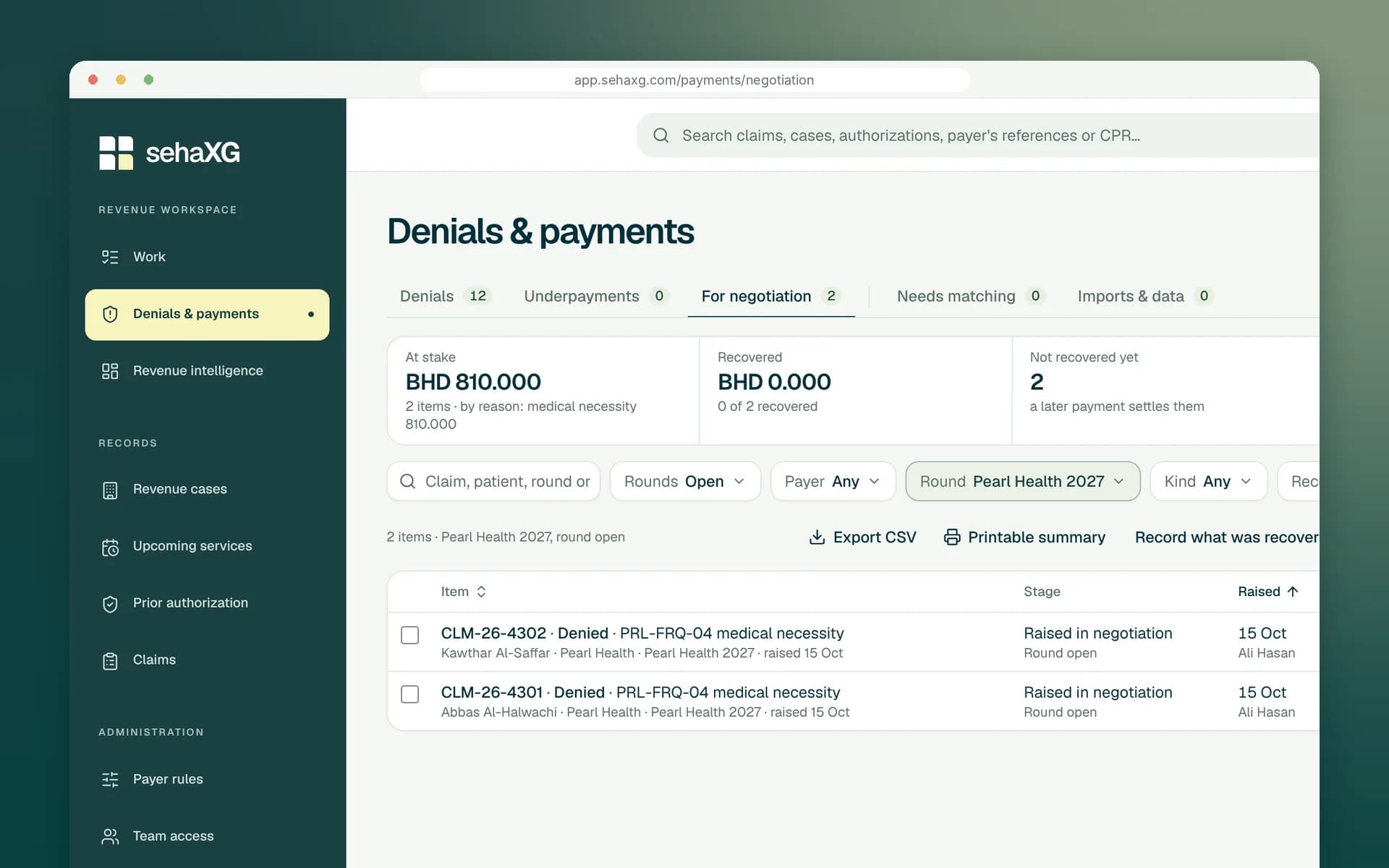
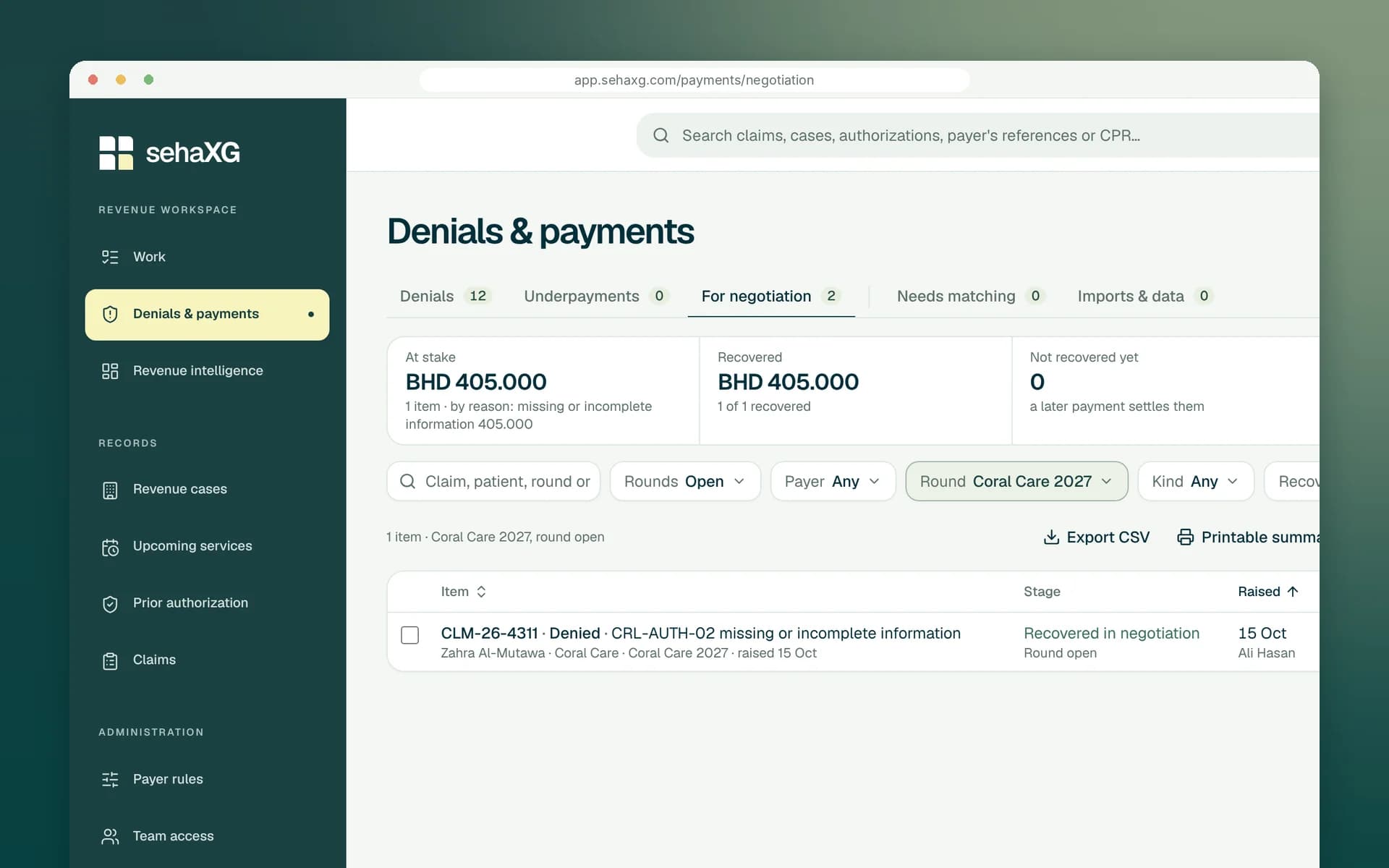
For negotiation gathers everything raised for each payer's round: the amount at stake, broken down by reason, and what has already been recovered. A few clicks before a meeting, you know what you are asking for and why.
04 / STEP 3
Every item keeps its owner and its story
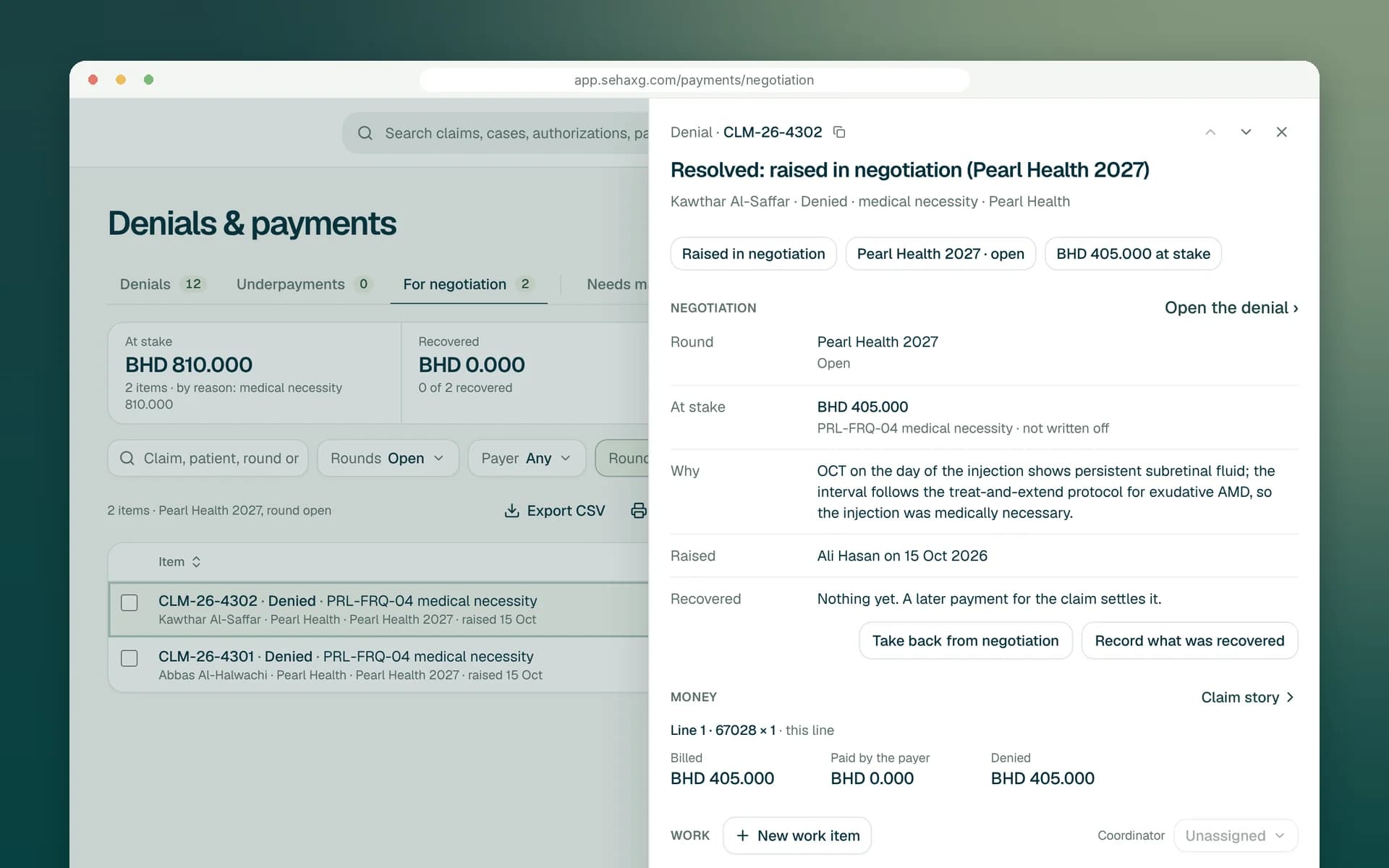
Open an item and the case is all there: the round, the amount, the why, who raised it and when, and what has been recovered. Notes and follow-up work stay with the item, so the conversation with the insurer can pick up where it left off.
05 / STEP 4
Walk in with one page
The printable summary puts the round on a single page: each claim, its reason, its why and the amount, totalled by reason. Export it as CSV if the insurer would rather work from a spreadsheet.
06 / STEP 5
When the insurer pays, it counts
After the meeting, the settlement arrives in the insurer's payment file like any other payment. sehaXG matches it to the item and marks it Recovered in negotiation, so the result of the meeting is a number, not a memory.
THE NEXT STEP
Start the file now, not in contract season
The best time to write down why a claim shouldn't have been denied is the day it is denied. Raise the ones worth arguing as they come in, and your next insurer meeting starts with reasons instead of a list.