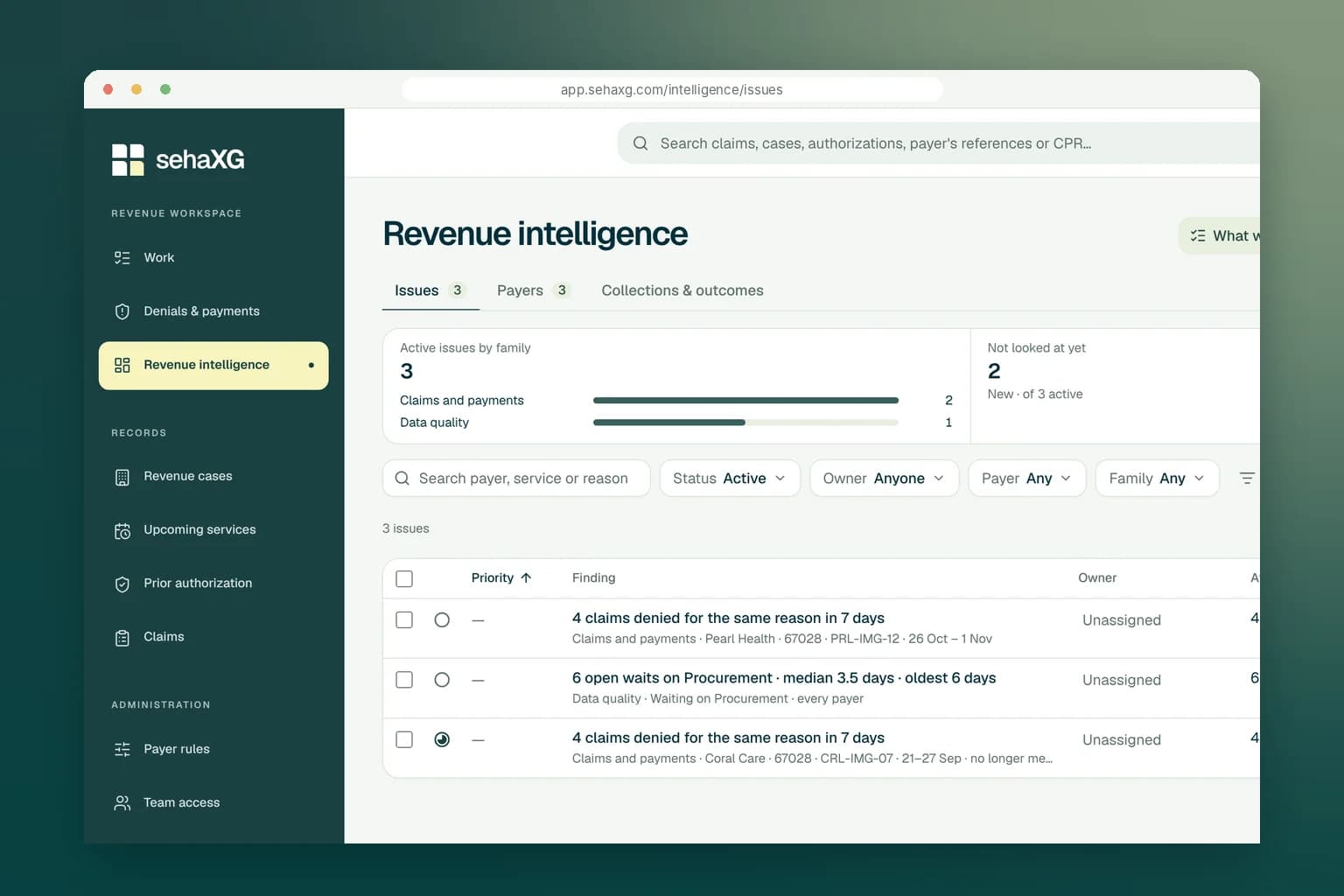
Ask a revenue manager where the money goes missing and the answer is rarely one big failure. It is an approval that expired while the case sat with Finance. A denial a senior biller would have prevented. A claim written off because nobody had time to explain why it should be paid. This short series looks at three habits that close those gaps, with screens from sehaXG showing what each one looks like in practice.
01 / HABIT 1
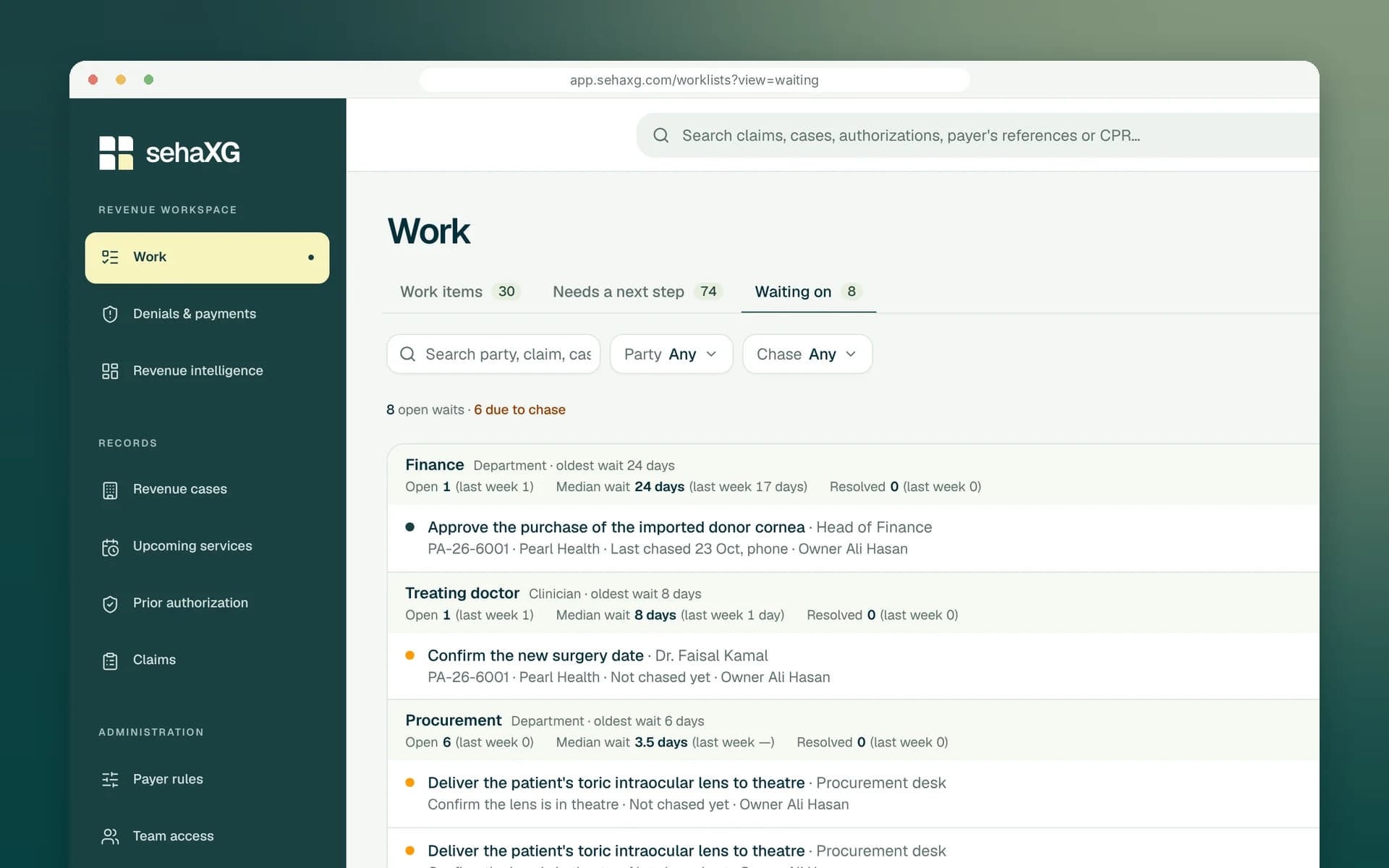
Every dinar has an owner
From the first phone call to the final payment, every case needs a name on it, a next step and a date. When it is waiting on someone outside the team (a doctor, Finance, a purchasing desk), that wait is recorded too, with the day it was asked and the next chase. When waits pile up on one desk, the manager hears about it without walking the corridors.
02 / HABIT 2
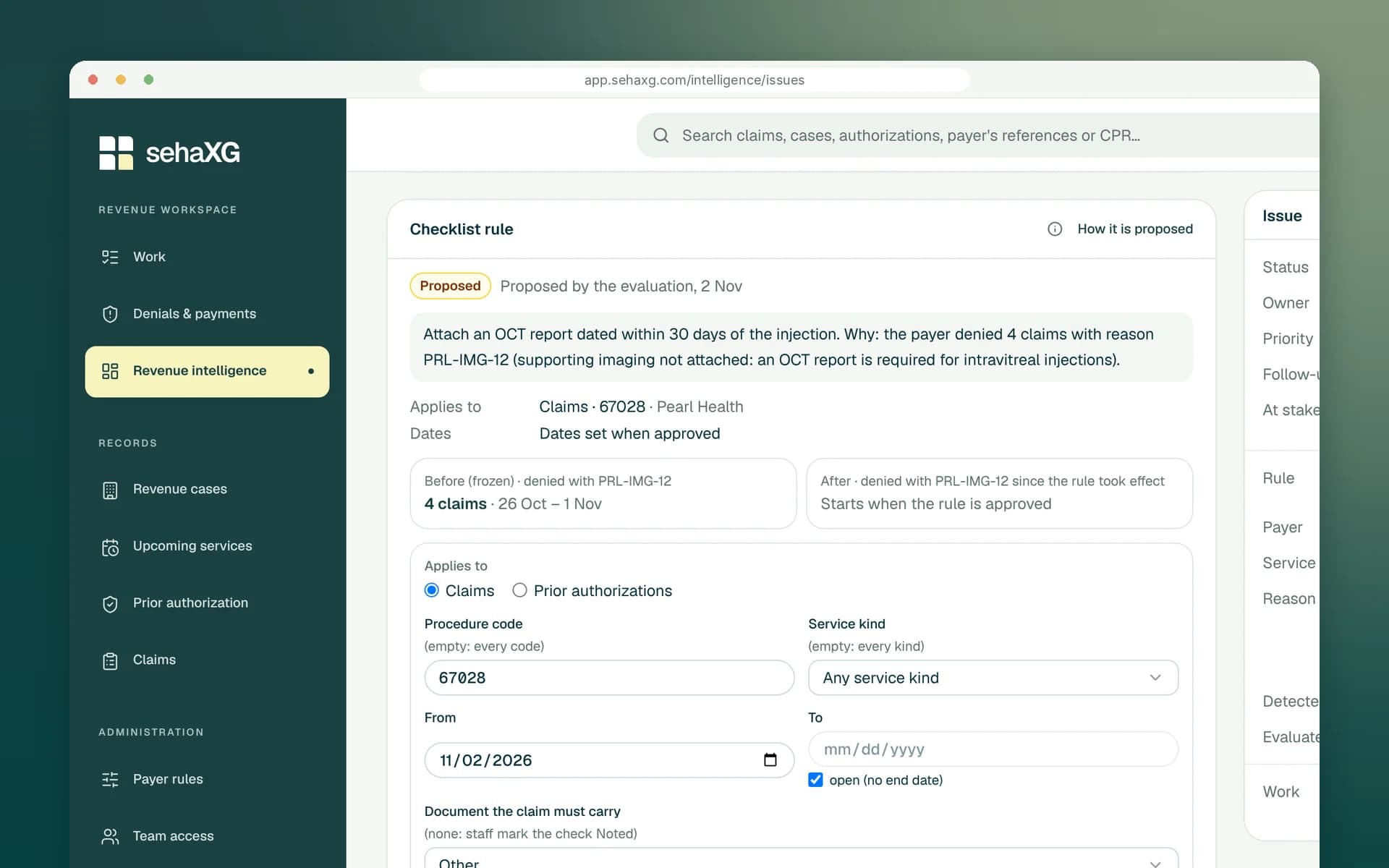
Experience in the system, not in heads
The rules your best people know should be checked on every claim, not remembered by a few. When a payer denies the same service for the same reason several times, the system proposes a checklist rule. A manager approves it, and the next claim is checked before it goes out. Then the count shows whether it worked.
03 / HABIT 3
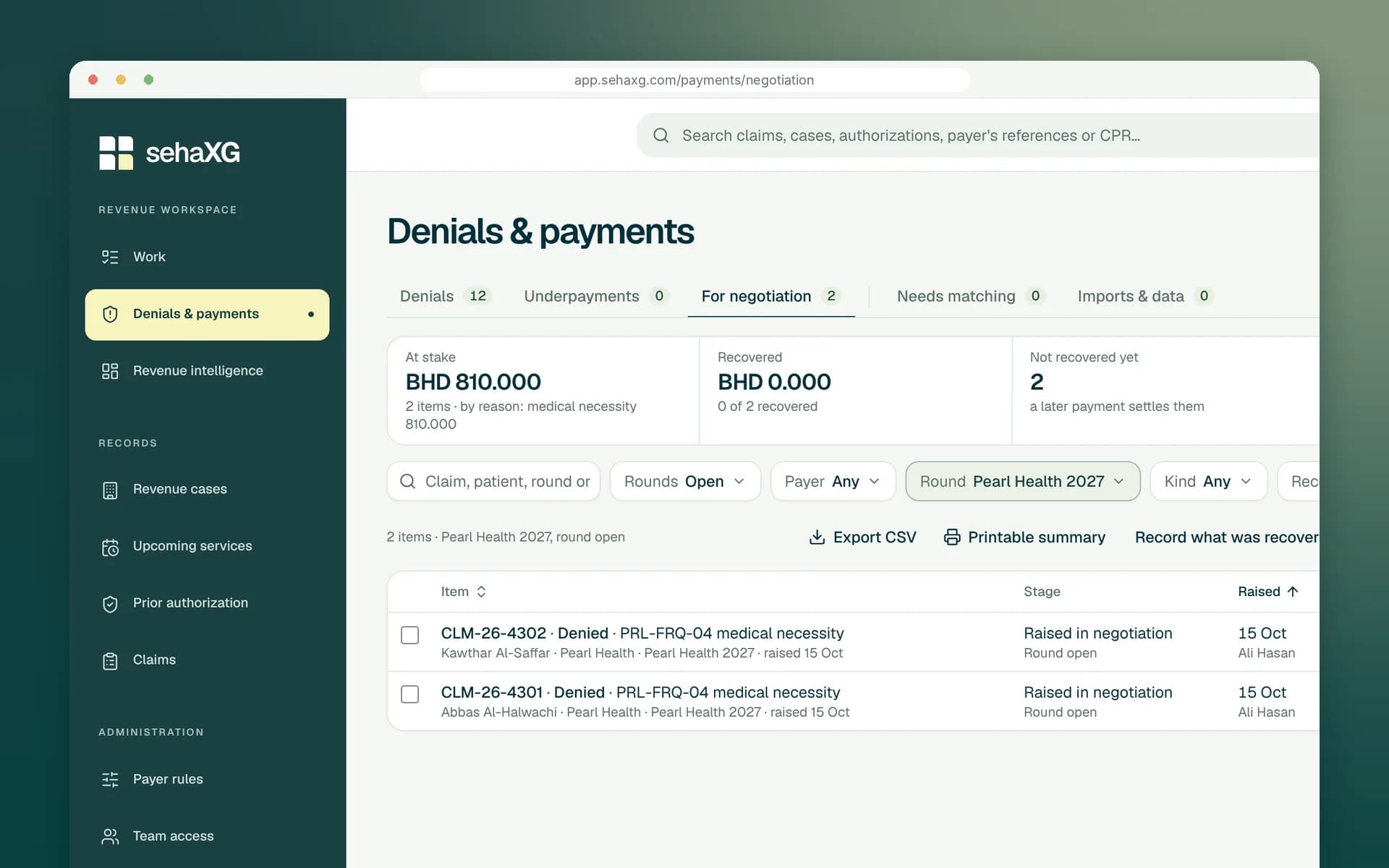
Bring reasons, not a list
Some denials are worth more at contract time than in an appeal queue. Raise them into the payer's negotiation round as they happen, each with why it shouldn't have been denied, and the meeting file builds itself through the year: amounts by reason, one page to print, and what was recovered afterwards.
04 / THE RESULT
Numbers that protect your team
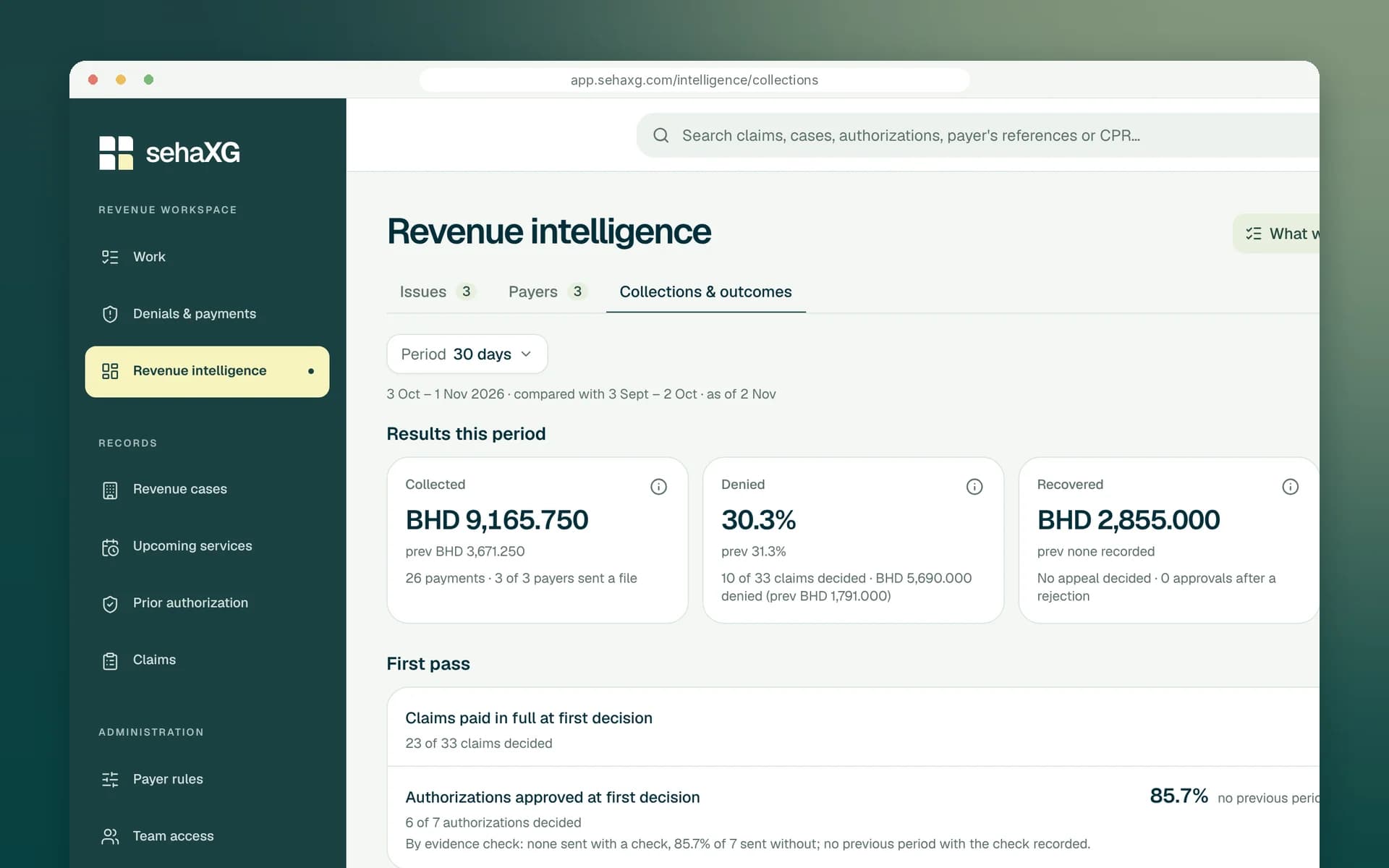
When work has owners, rules and reasons, the results can be counted: what was collected, what was recovered, and how many claims were paid in full at the first decision, each compared with the period before. Each figure says how it is counted, so it holds up when someone questions it.
That matters the day someone suggests the revenue team is the easiest place to cut costs. A manager with these numbers can show what the team brings in, not just describe it.
THE NEXT STEP
Start with one habit
You don't need all three at once. Pick the one that hurts most: a case that stalled between departments, a denial that keeps coming back, or a contract meeting coming up. Then see it working on your own cases.