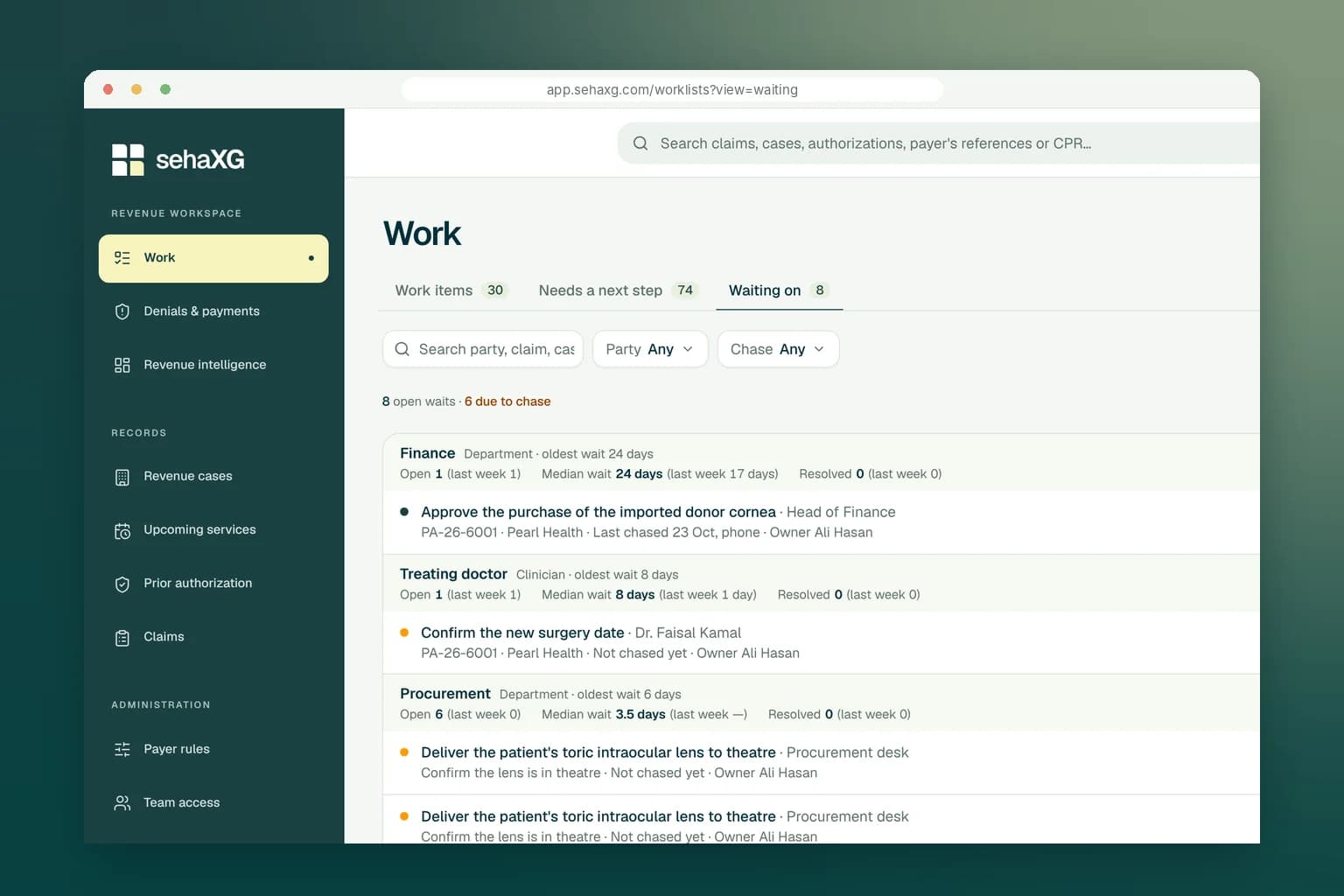
Picture a corneal transplant. The insurer approves it: BHD 2,400. Then the case goes quiet. The surgeon is waiting for a theatre date, the theatre is waiting for the donor cornea, and the cornea is waiting for Finance to approve the purchase. Three weeks later the approval is about to run out, and the first person to ask about it is the patient.
01 / THE PROBLEM
Money slips at the hand-offs
Most revenue teams are good at the parts they own. The trouble starts where work crosses a line: from booking to approvals, from approvals to billing, from billing to a doctor or a purchasing desk. At each crossing the case changes hands, and often nobody writes down who has it now.
So the manager does the only thing that works: walks the corridors and asks. It works, until there are too many cases to ask about.
02 / STEP 1
Start the case before the patient arrives
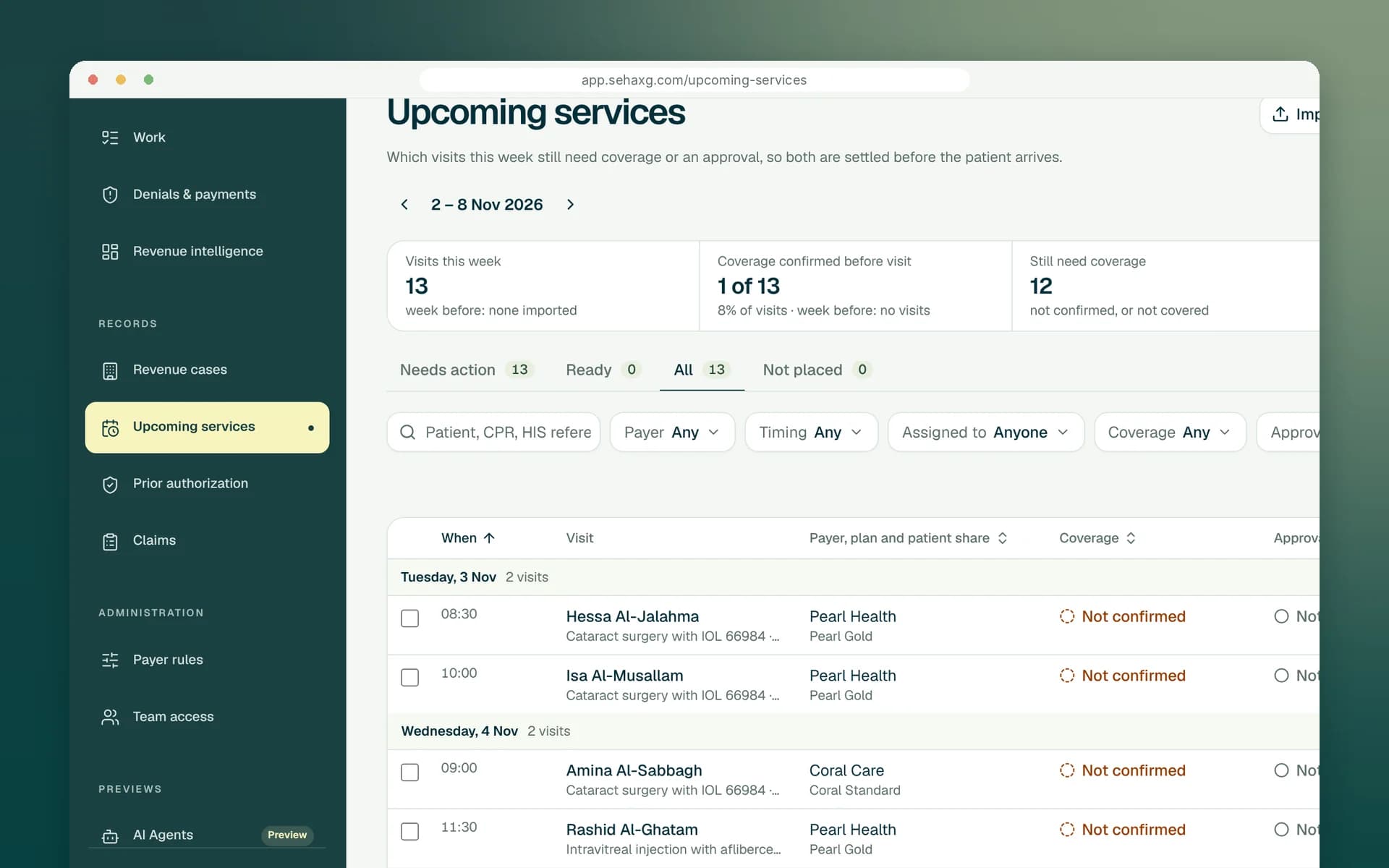
Revenue work starts with the phone call, not with the claim. sehaXG imports your appointment list and shows, for each visit next week, whether coverage is confirmed, whether an approval is needed and who is assigned to settle it. The gaps are visible days before the patient walks in.
03 / STEP 2
When the approval comes back, billing already has it
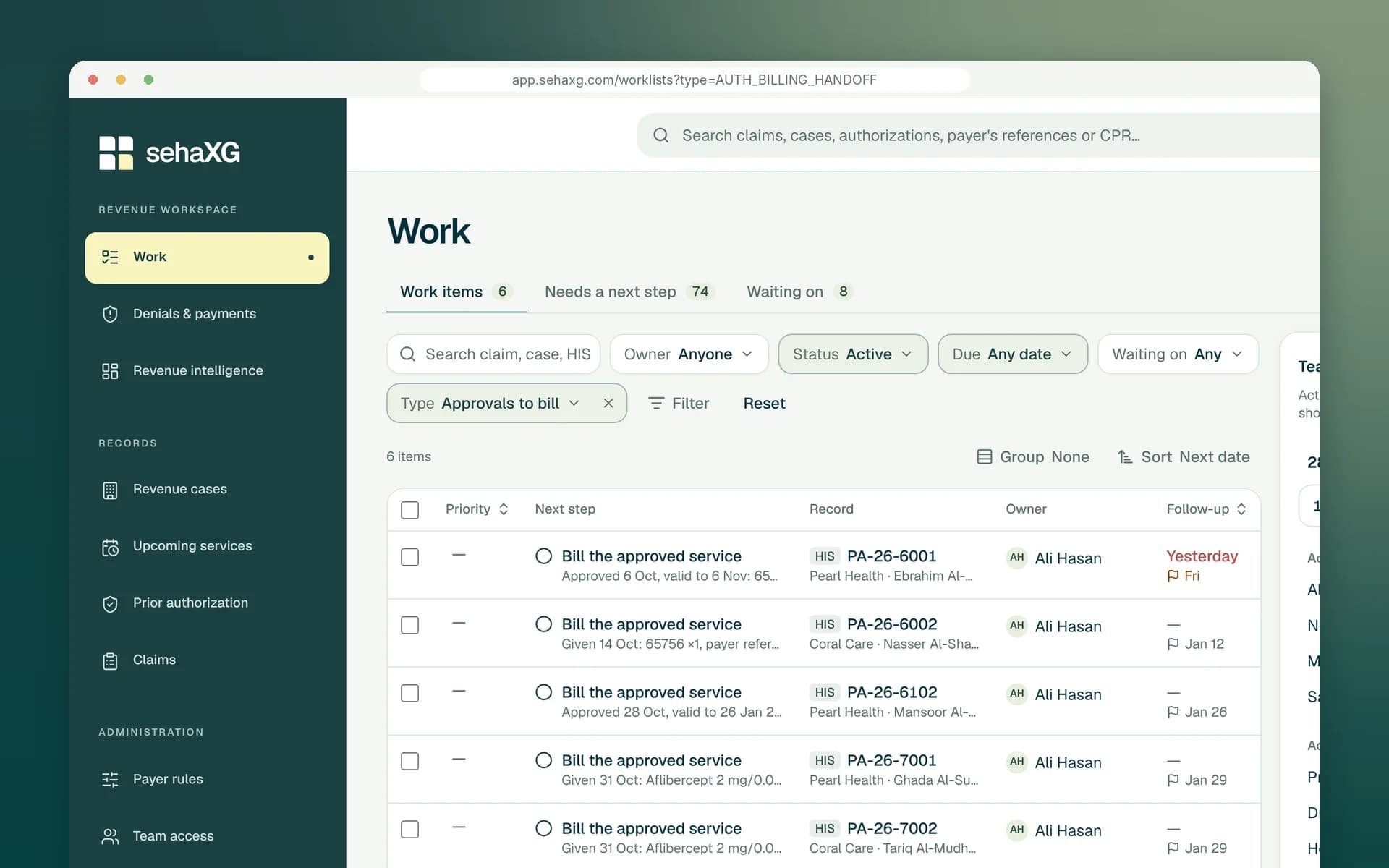
The moment an insurer approves a service, billing gets a work item: bill the approved service. It has a named owner and the approval's end date on it. Nobody has to remember to pass it on, and nobody has to guess whose it is.
04 / STEP 3
Waiting on someone? Say who, and since when
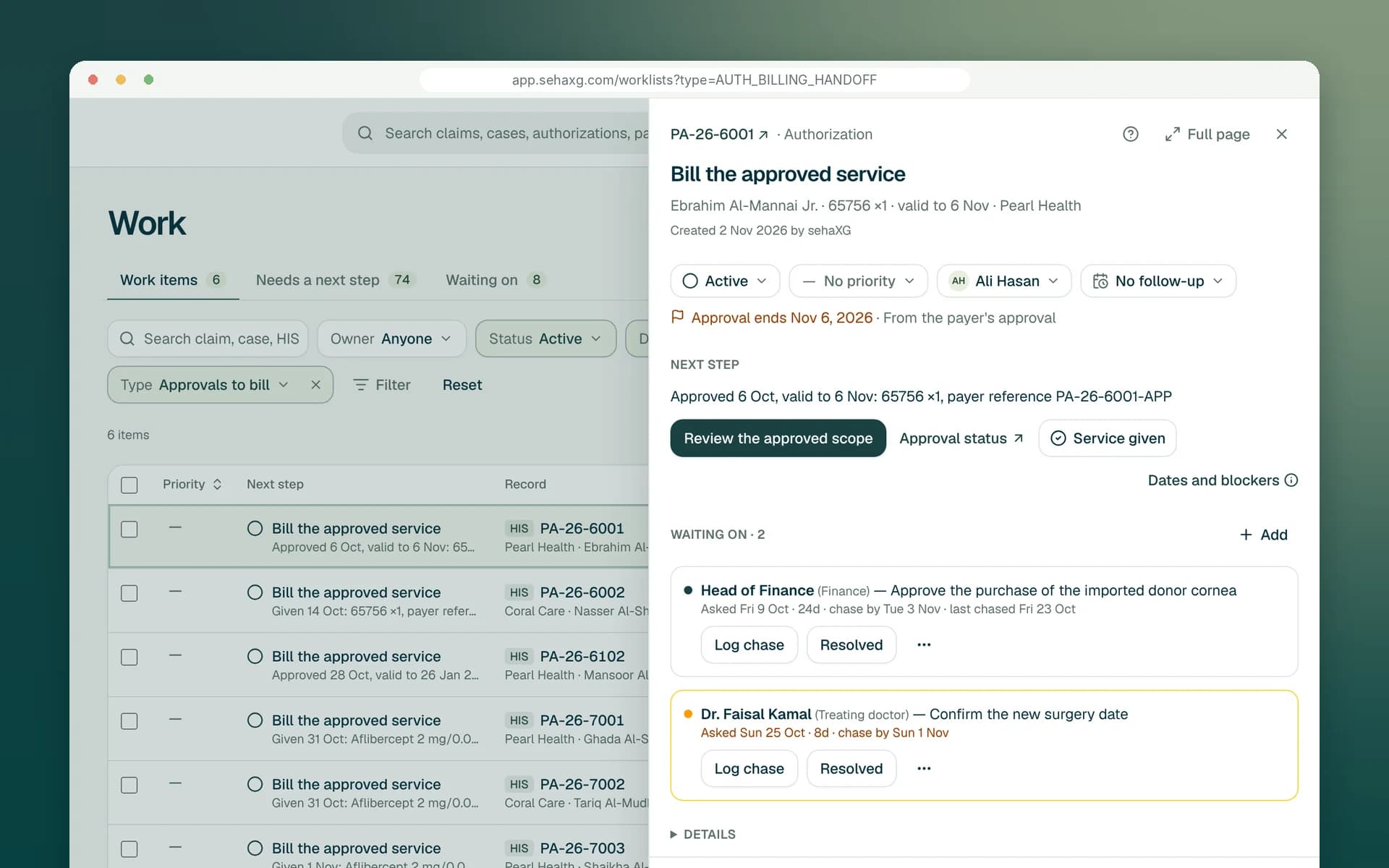
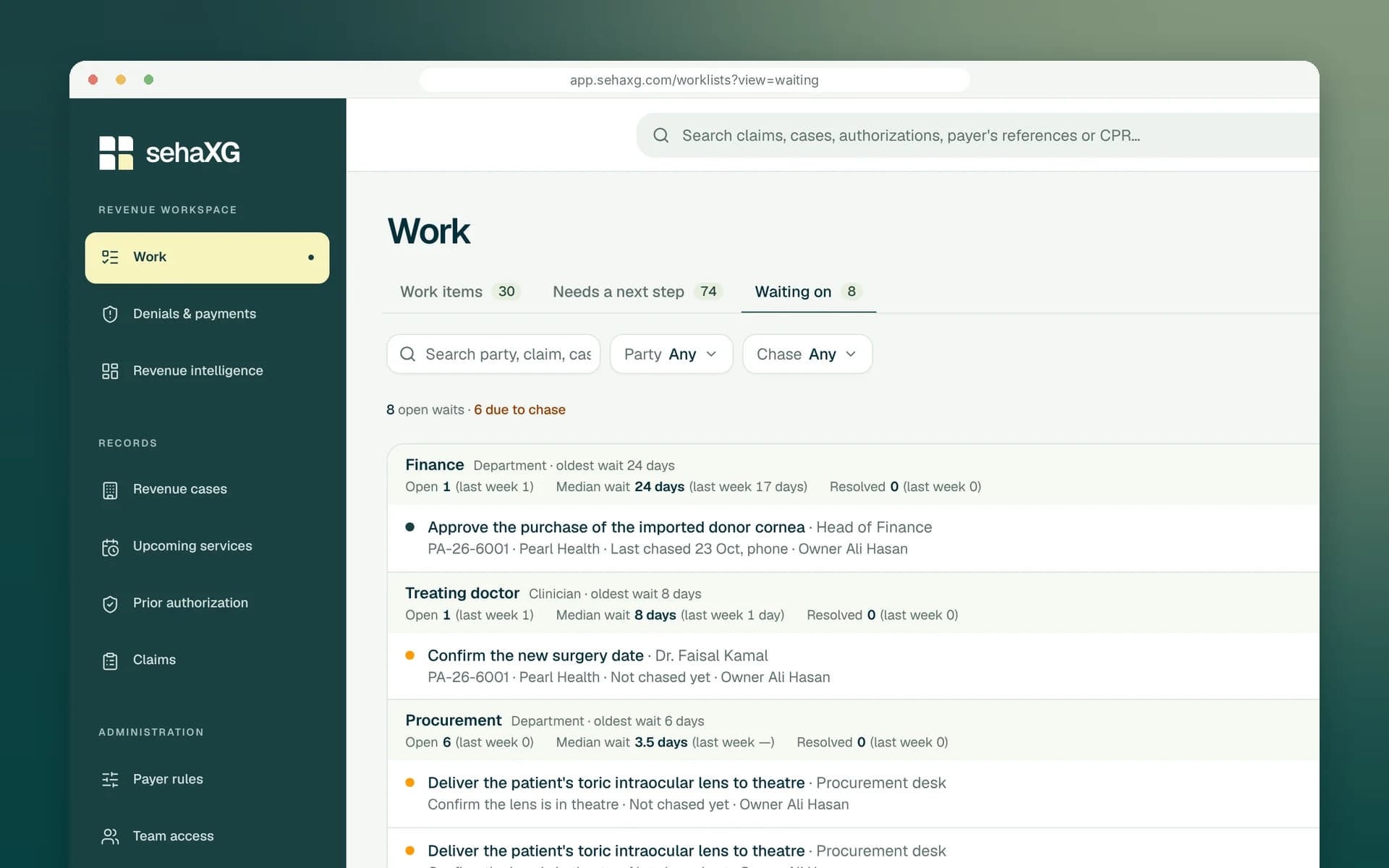
Open the item and you see what it is waiting for. For the corneal transplant, two things: the Head of Finance must approve buying the donor cornea, and the treating doctor must confirm a new surgery date. Each wait names the person, the day it was asked and the next date to chase. Logging a chase is a button on the item.
05 / STEP 4
Every wait in the hospital on one page
Waiting on collects these waits across every case, grouped by who holds them, with how long each has waited and the median wait compared with last week. It answers the question the corridor walk was for: who has it, and since when?
06 / STEP 5
When waits pile up, they come to you
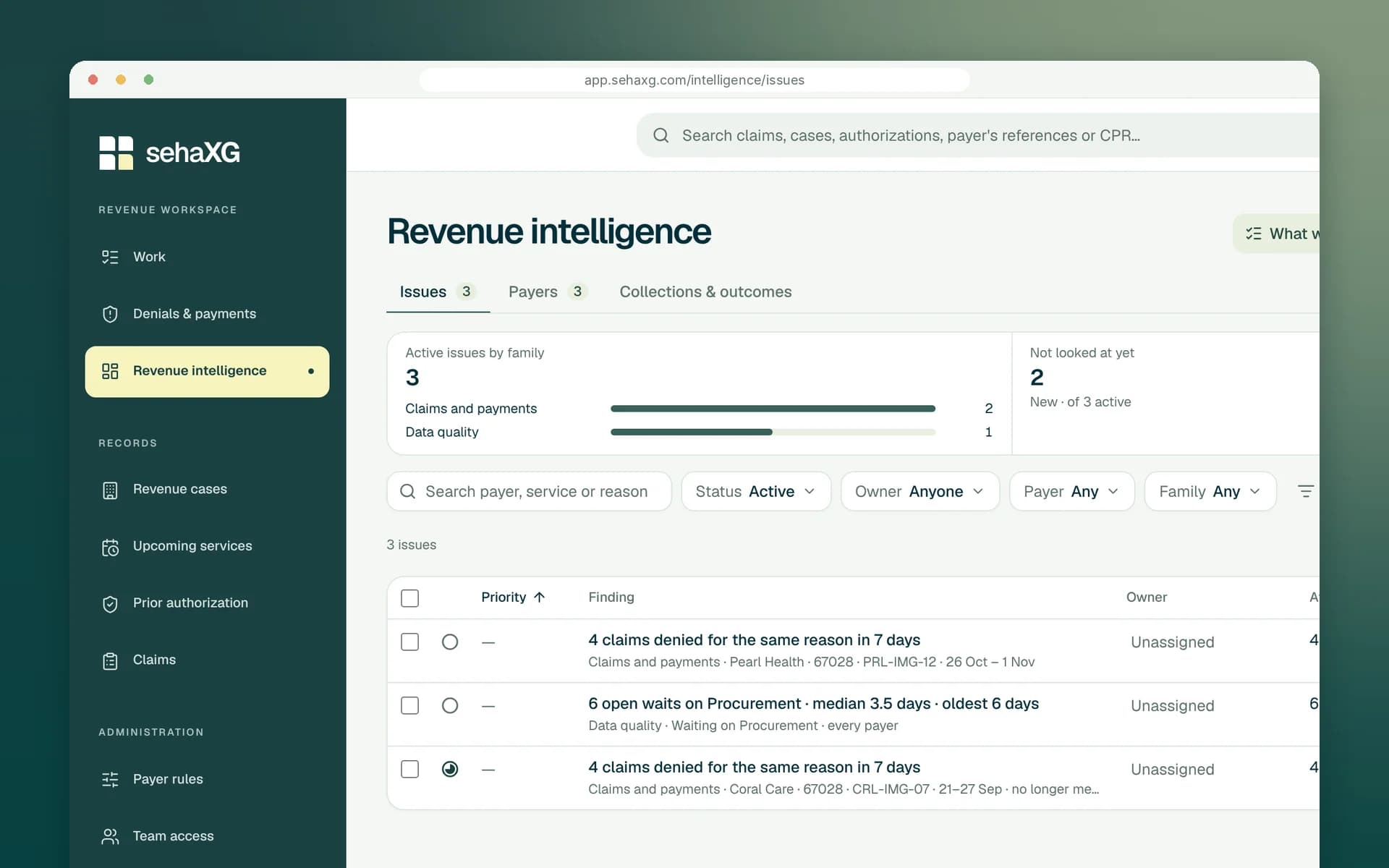
One late lens is a reminder. Six late lenses on the same desk is a pattern, and a pattern belongs to the manager. Revenue intelligence notices when five or more waits pile up on one party and raises it as an issue, next to the repeated denials, so it doesn't depend on someone spotting it in a list.
THE NEXT STEP
Ask one question of every case
Who has it, what happens next, and by when? If every case can answer that, nothing stalls quietly. Start with your highest-value services, the ones that need something ordered or approved inside the hospital, and give each one an owner from the first call.