Every revenue team has someone who just knows. One insurer wants the OCT report with every eye injection. Another needs the approval number on the claim, not only on its portal. A new hire learns these the hard way: from denials, a month after the claim went out.
01 / THE PROBLEM
More people isn't the same as more experience
When a team is short-handed, the usual answer is to hire. But a new biller doesn't know what your senior biller knows, and a checklist in a spreadsheet is out of date soon after it is written. Senior staff end up checking junior work, and the mistakes still reach the insurer.
The fix is to keep the know-how where the work happens: in the checks every claim goes through before it is sent.
02 / STEP 1
Your denials already know the rule
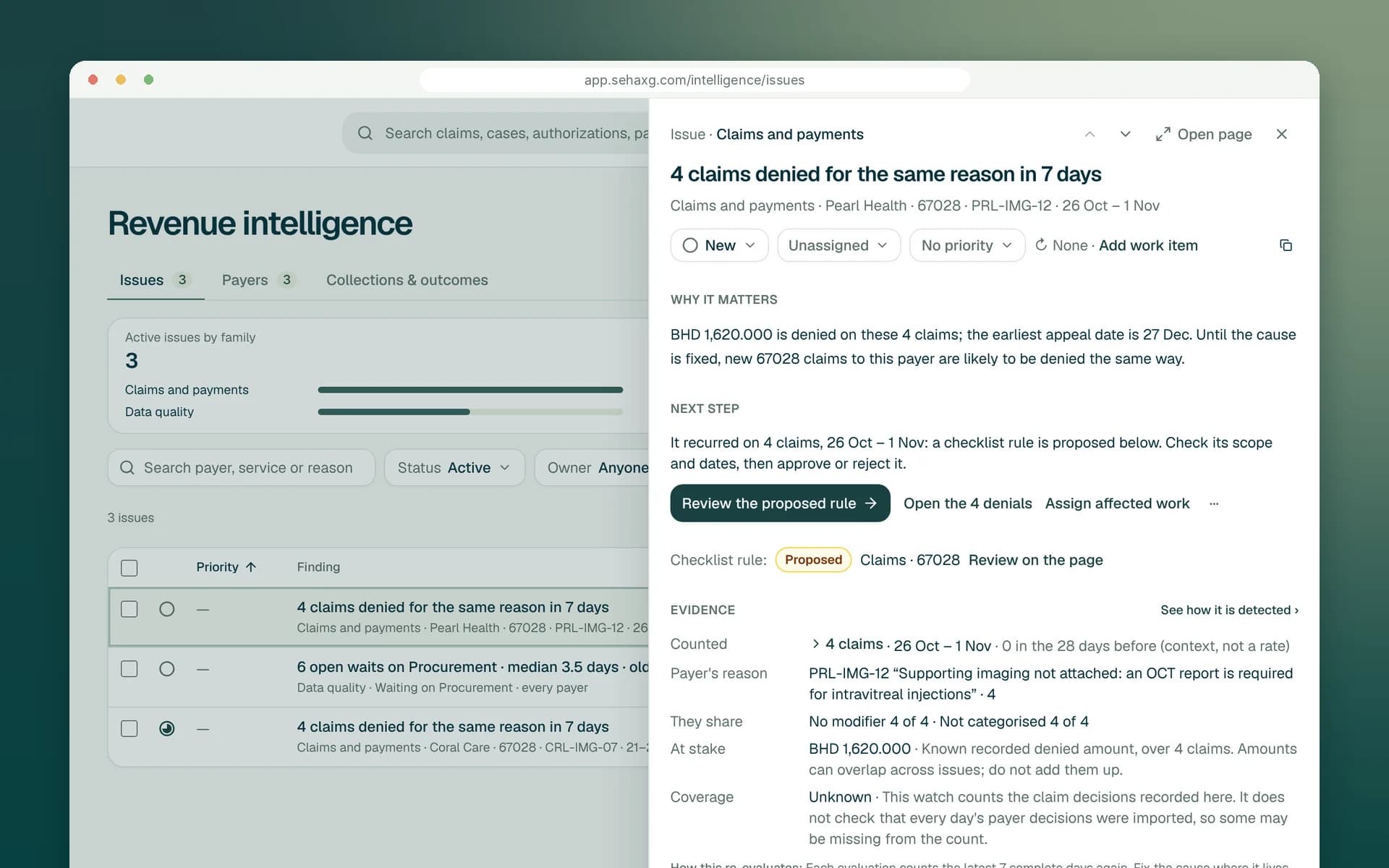
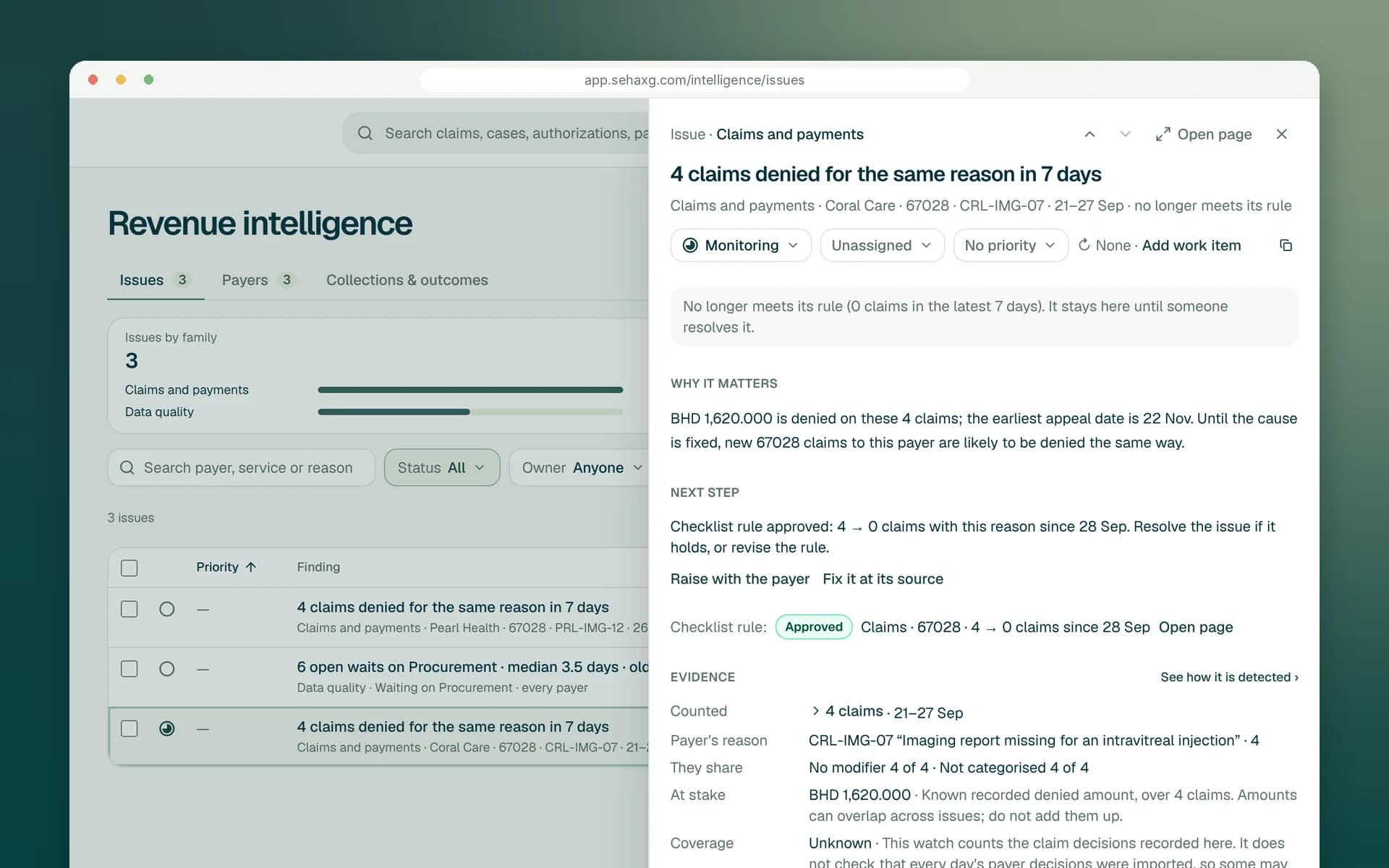
When the same payer denies the same service for the same reason several times in a week, that is a lesson, not bad luck. Revenue intelligence watches for it. Here, Pearl Health denied four eye injections in seven days with one reason code: the OCT report wasn't attached. BHD 1,620 is at stake, and every new injection claim to Pearl is likely to be denied the same way.
03 / STEP 2
A rule in plain words, approved by a person
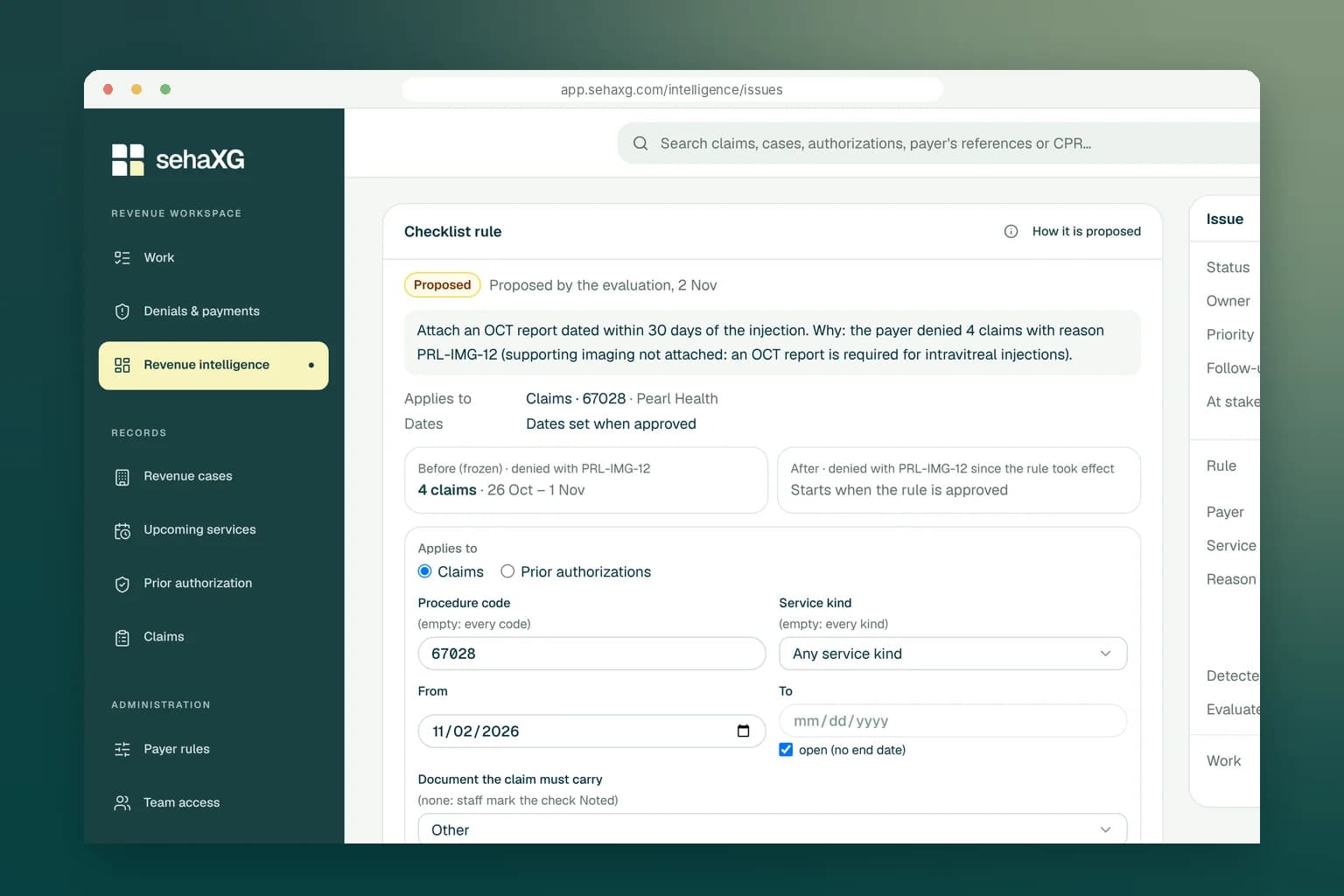
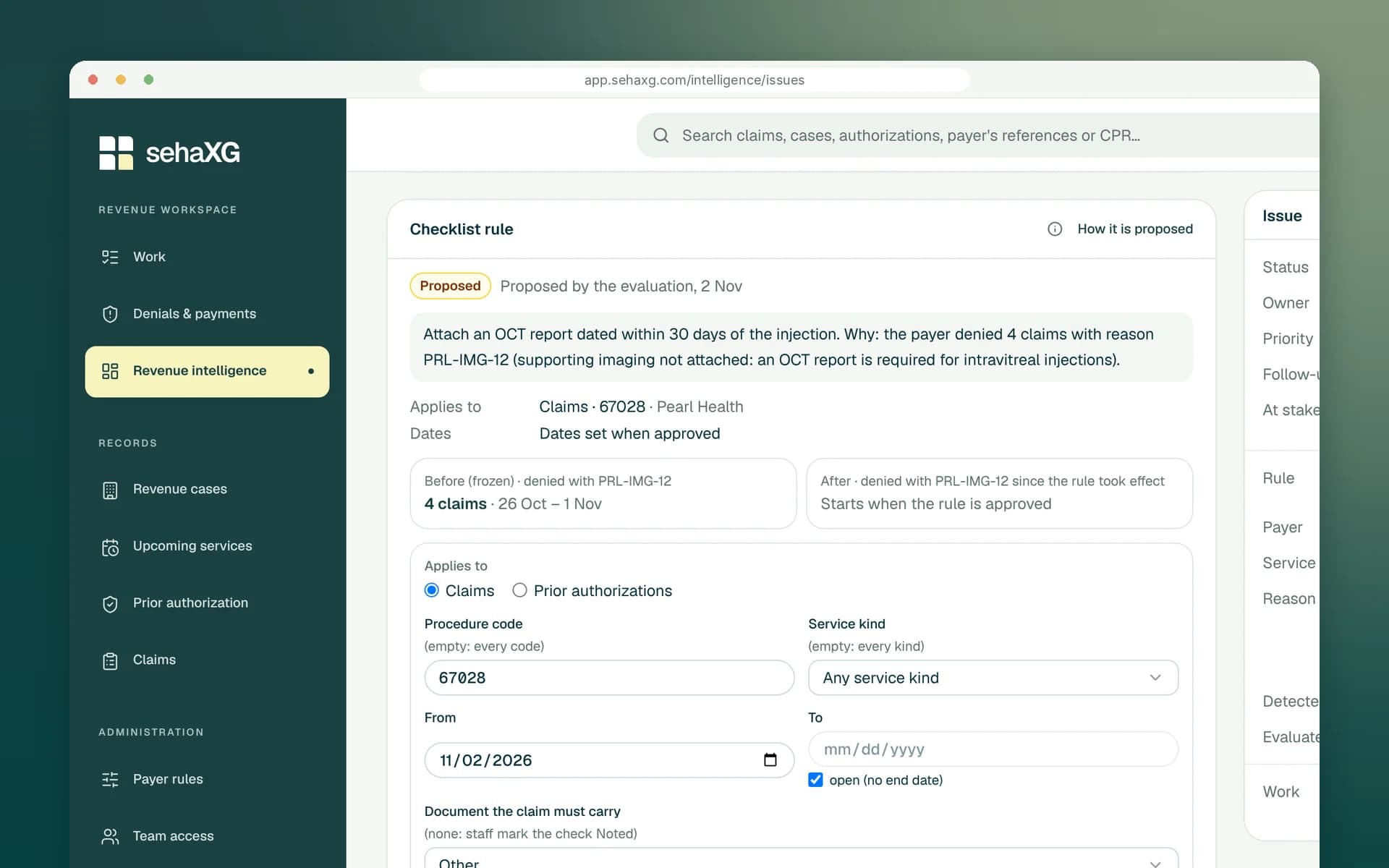
From those denials, the system proposes a checklist rule in plain language: attach an OCT report dated within 30 days of the injection. It shows why, which claims it applies to, and the count before it takes effect. Nothing changes until a manager reviews the scope and approves it.
04 / STEP 3
The next claim gets it right
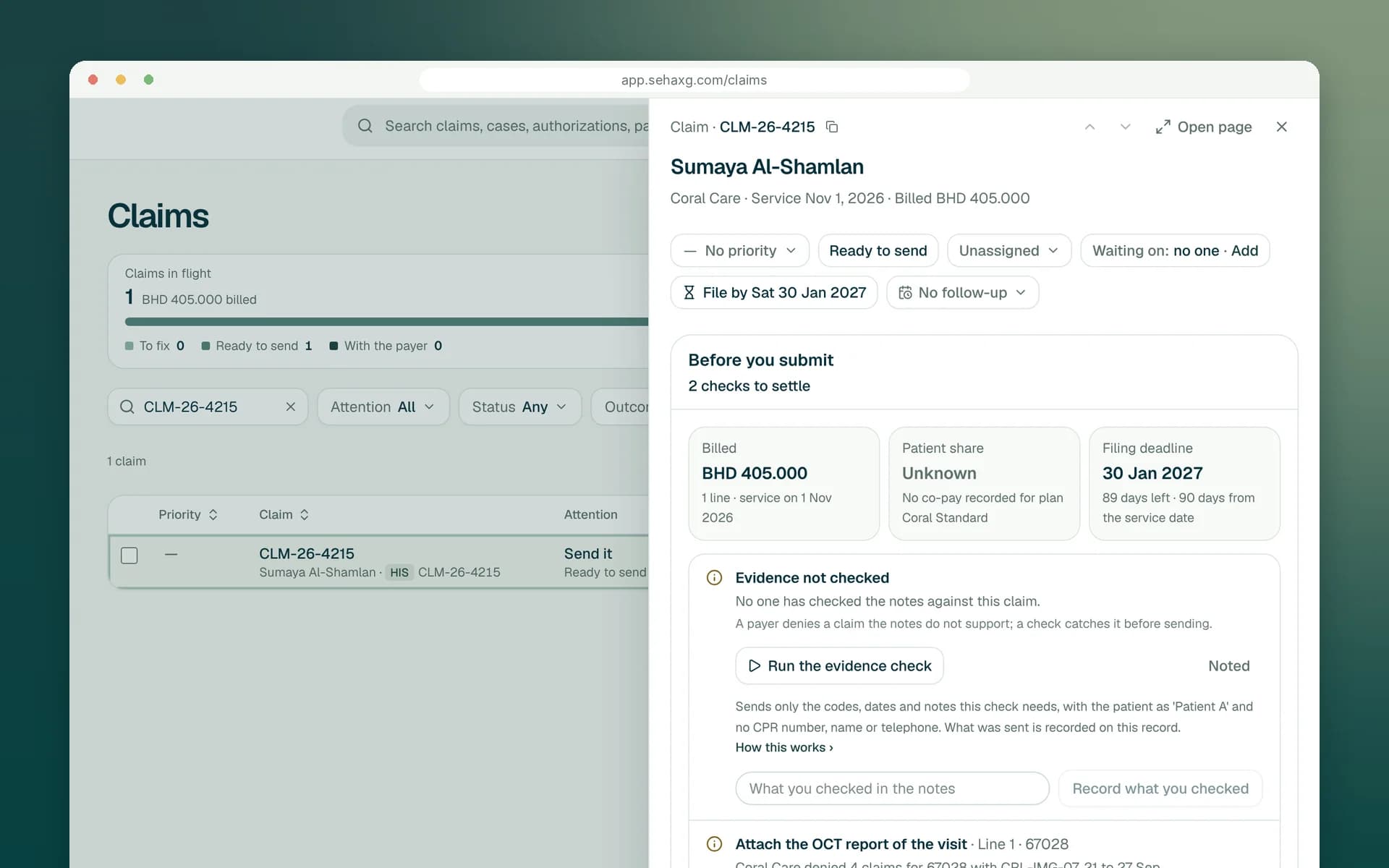
Once a rule is approved, it appears on every matching claim before it is submitted, with the reason and who approved it. Below is the same lesson learned from another payer, Coral Care, a month earlier. A biller who started yesterday sees exactly what your most experienced colleague would have told them.
05 / STEP 4
Then check that it worked
A rule is only as good as its results. Each one counts the denials with its reason before and after it took effect. On Coral Care, a month after approval, it reads 4 → 0. If the denials keep coming, the rule is revised, not trusted blindly.
06 / STEP 5
The same idea, before the approval request
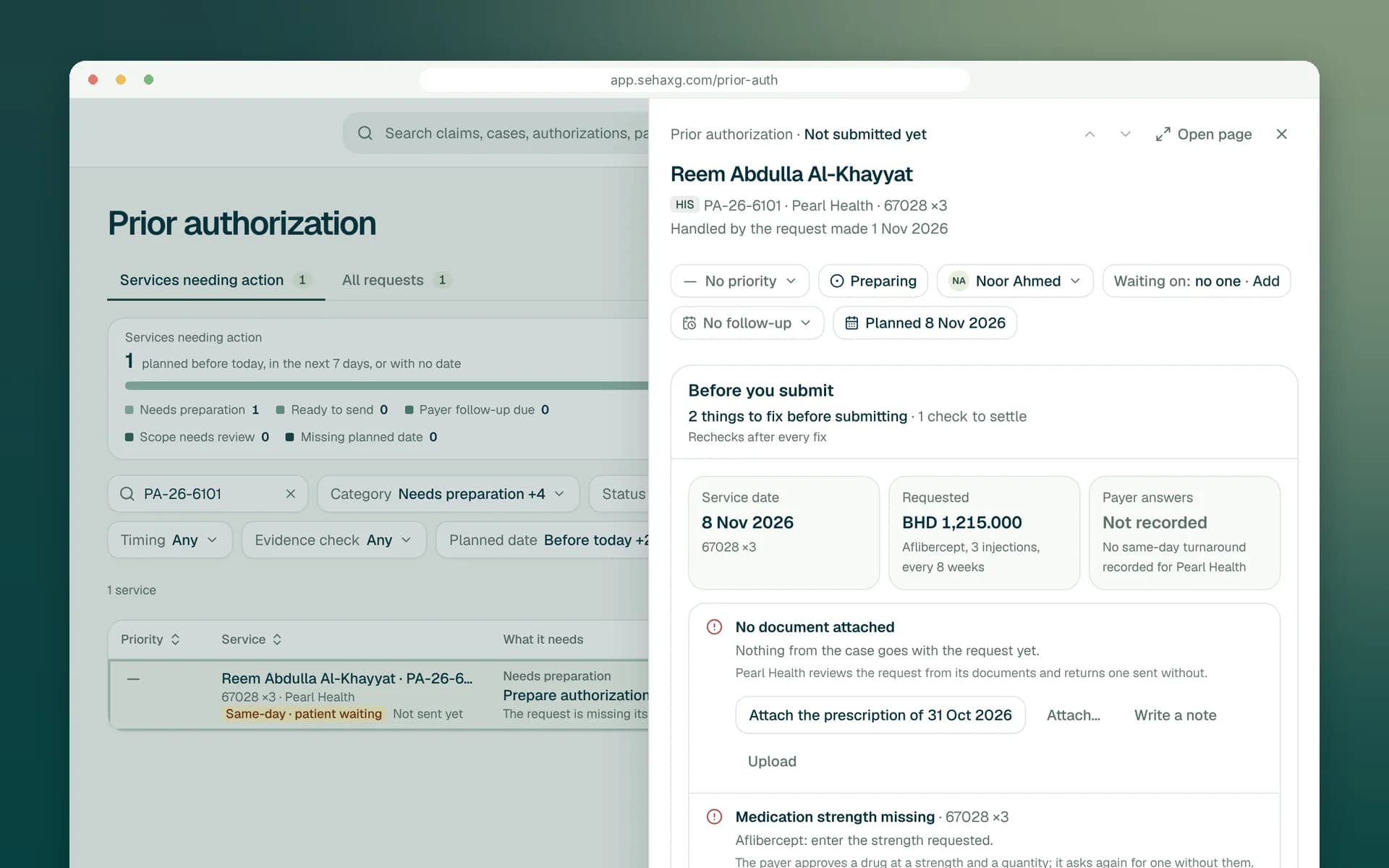
Prior authorization works the same way. Before a request goes to the insurer, it is checked for what that payer would send back: a missing document, a drug without its strength. Here a BHD 1,215 course of injections can't be sent until both are fixed, and the prescription to attach is already offered.
07 / WHY IT'S DIFFERENT
Your rules, from your denials
Generic claim scrubbers check against generic rules. These checks come from your payers, your services and your own denials, in words your team can read, and each one has a person who approved it. That is how a new hire gets to work like an experienced one.
THE NEXT STEP
Make every denial teach you once
A denial you learn from once is a cost. A denial you keep receiving is a habit. Pick your most frequent denial reason this month, write down the rule that would have prevented it, and watch the count.